
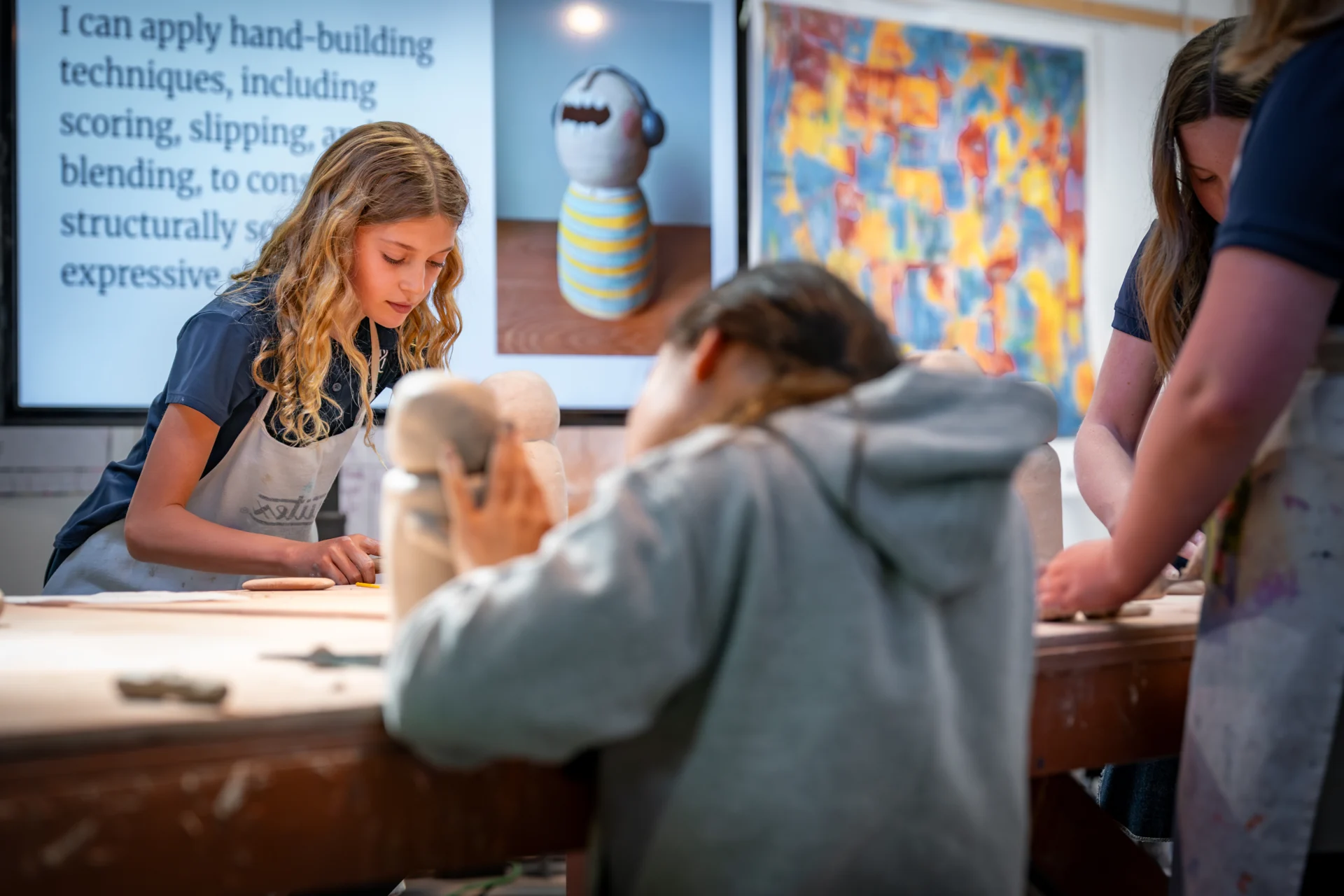
Story by: Jennifer White ’89 | Head of Middle School and Assistant Head of School
Photos by: Chris McConnell
The middle school years are often characterized by profound physical, emotional, social, and cognitive change, representing one of the most intense periods of growth in human development. Students are transitioning from childhood into adolescence, seeking independence while still craving structure and guidance. They are asking big questions about who they are and how they belong. For educators, this developmental stage presents both tremendous opportunity and great responsibility. At Holland Hall, the question was clear: How can we design a learning environment that not only meets students where they are, but also launches them toward their full potential?
The answer is taking shape in the form of a new, state-of-the-art middle school building, one that is the result of years of research, deep reflection, and collaborative planning. The building, set to open its doors in the coming years, is envisioned as more than a construction project. It represents a bold investment in the future of learning and reinforces Holland Hall’s commitment to transformative education.
The process began with the formation of a design committee: a cross-functional team of educators, administrators, parents, and students charged with researching, dreaming, and planning. This committee didn’t begin with blueprints or budgets. It began with questions about learning.
“What do middle school students need, not just academically, but developmentally, emotionally, and socially?” “How can a building support our teaching philosophy?” “What kind of space can be designed to allow students to feel seen, safe, and inspired?”
These questions sparked months of deep exploration. The committee immersed themselves in readings, research, and conversations, continually refining their ideas and sharing insights. From this work emerged a vision of exemplary middle‑level learning: personalized, relevant, joyful, and profoundly engaging.
The committee identified three major priorities that continue to guide every design and curricular decision:
Each of these priorities is supported by specific structures and strategies. Strong relationships between students and adults form the foundation of personal learning. Social-emotional development is woven into daily routines. Students are offered meaningful choices in their work and encouraged to contribute to the life of the school. Understanding how adolescent brains develop helps guide everything from classroom pacing to support systems.
Importantly, these priorities aren’t just about philosophy. They are about practice, and they will be embedded into the very design of any new building.
A building and a middle school curriculum must be designed hand-in-hand.
The Portrait of a Middle School Learner began with a committee of teachers and was then vetted by a broad cross‑section of our community: students, faculty, parents, board members, and alumni. This guiding document aims to identify and describe the eight key qualities we believe are necessary for student success. These eight characteristics collectively define Holland Hall’s vision for middle school education: nurturing capable, compassionate, and engaged learners prepared for the world ahead of them.
Additionally, our deep work with Mind, Brain, and Education (MBE) and Competency-Based Learning (CBL) guides the way we intentionally engage students during these critical middle school years.
By integrating these two frameworks, we are working to create classrooms where students are not only challenged but also deeply engaged, where they know what they’re learning, why it matters, and how they can grow. This work affirms our belief that middle school should be a time of discovery, empowerment, and authentic learning, guided by both research and compassion.
And while rigor remains a core value, challenge doesn’t have to come at the expense of joy. Students should feel excited to come to school. They should feel that their voices matter. They should be able to explore big ideas in ways that are personal and purposeful.
Student voices
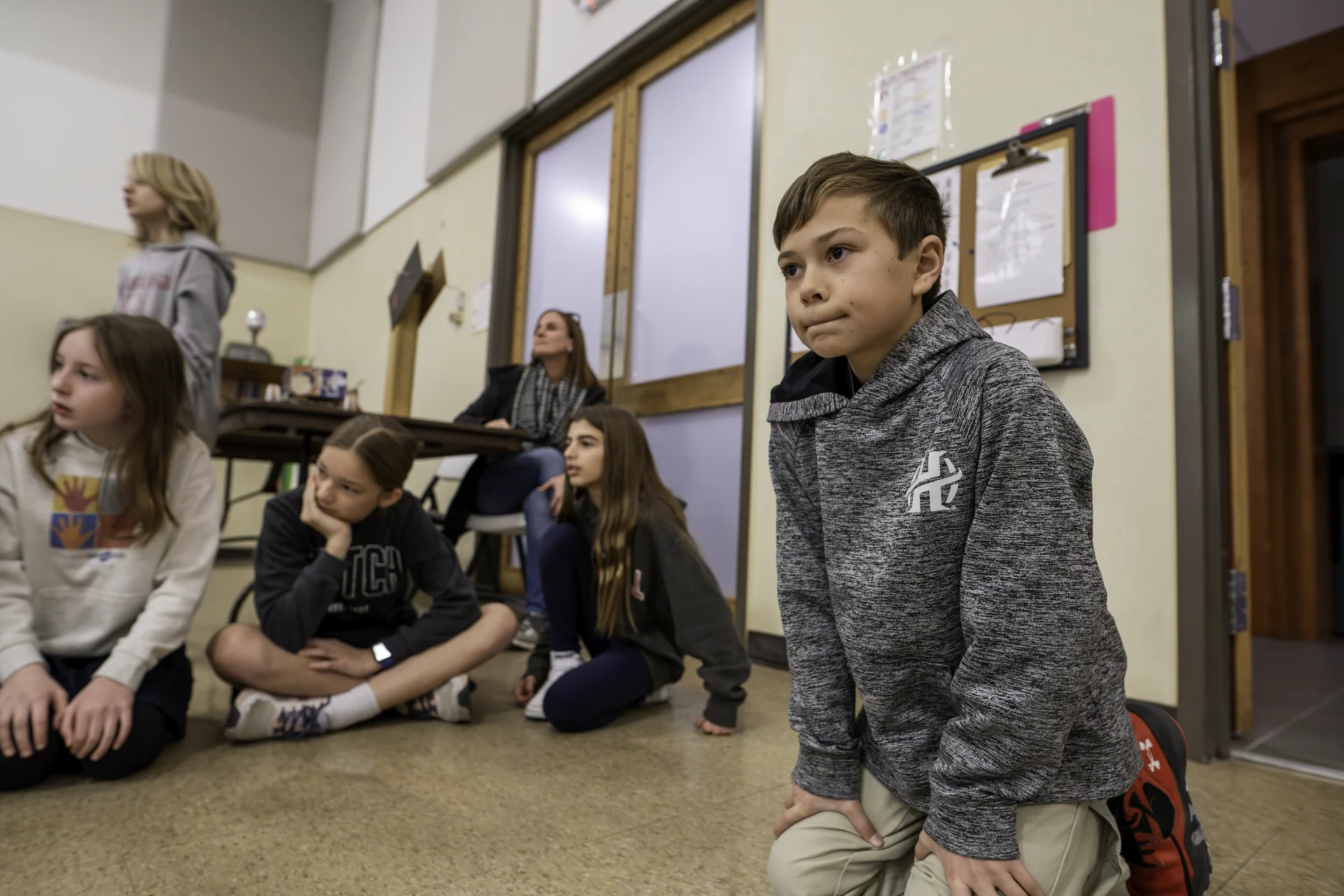
Throughout the design process, Holland Hall made a deliberate choice to center the student experience. Surveys, focus groups, and informal conversations with middle schoolers helped guide decisions. Students shared where they felt most comfortable and where spaces tend to be overlooked. They described what helps them focus, what distracts them, and what kinds of spaces inspire creativity and connection.
One student suggestion, offered with both hope and conviction — a slide. A real, zoom-down-from-one-floor-to-another slide. Who knows? Maybe it will make it to any final plans.
These insights have informed every plan to date — from locker placement to hallway design. The goal? A building that will feel human-scaled, designed with students, not just for them.
A building to support our values
The committee knew that any new building had to reflect the school’s deepest values about teaching and learning. That meant rejecting the old model of long corridors lined with identical classrooms. Instead, the new middle school is envisioned as a dynamic, versatile environment, one that serves as a living expression of Holland Hall’s commitment to adolescent learners.
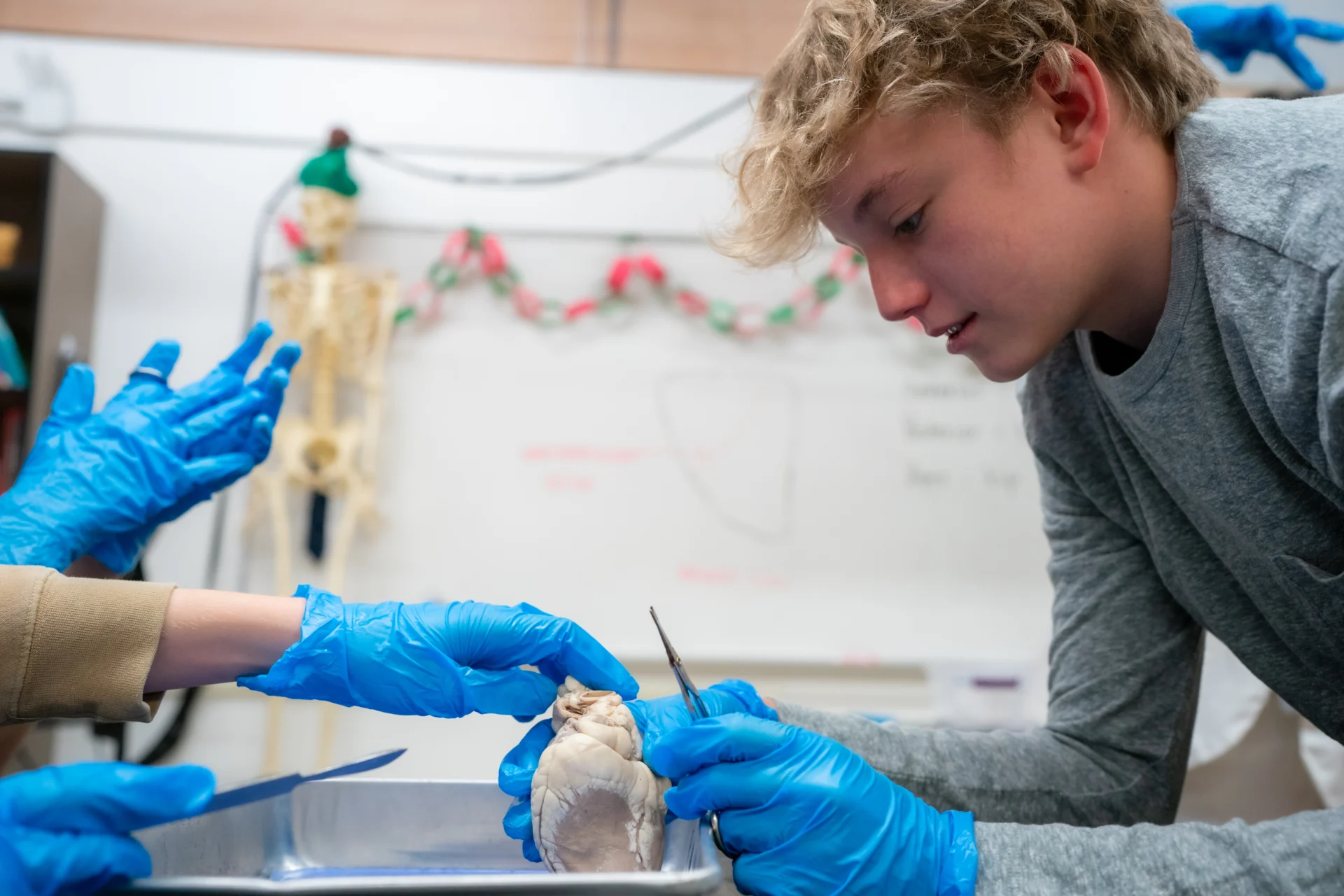
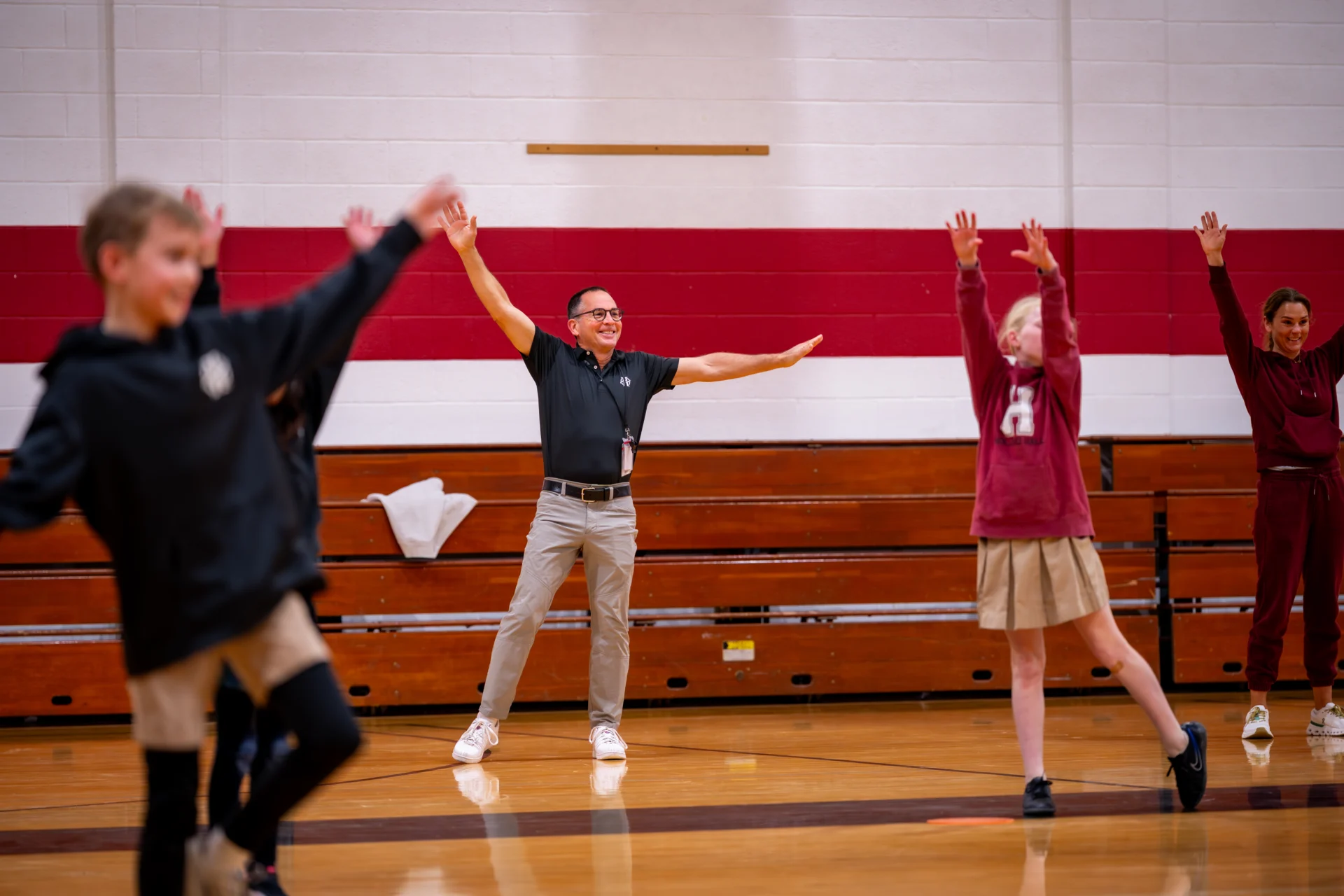
Flexible furniture and learning surfaces would allow teachers to shift between direct instruction, collaborative projects, independent study, and hands-on exploration. Transitional and versatile spaces could be built into the design, providing areas for small group discussion, quiet reflection, creativity, movement, and even play. These aren’t just “extras,” they’re essential to supporting a range of student needs throughout the day.
Natural light should flood the classrooms and common areas, complemented by color palettes and materials chosen to promote calm, creativity, and focus. Safety and visibility will always be key considerations in the design, giving teachers clear sight lines while ensuring that students feel secure, supported, and known.
Importantly, the building is not just for the students, it will be built for the educators who guide them. Faculty spaces promote collaboration and professional growth. Offices and meeting rooms are positioned to allow easy access to students while also preserving moments for reflection, planning, and collegial support.
Learning beyond the building
While much attention is focused on the interior of the building, the committee also emphasized the importance of learning that extends beyond four walls. Outdoor spaces, areas for socialization, relaxing, and collaborating, are all part of the plan. These spaces will provide opportunities for cross-disciplinary learning and give students a chance to connect with nature, something research has shown to be vital for adolescent health and development.
This emphasis on learning beyond the traditional classroom also reflects Holland Hall’s broader vision for middle school that includes experiences that are already embedded in the curriculum, and the new facility will allow for these experiences to expand and evolve.
Looking ahead
Holland Hall’s new middle school building will be more than a construction project: it will be a declaration: that middle school matters, that young adolescents deserve spaces that reflect who they are and who they’re becoming and that thoughtful design can be a catalyst for deeper relationships, richer learning, and greater joy.
As schools around the world continue to grapple with how best to meet the complex needs of middle schoolers, Holland Hall is presented with a unique opportunity to do just that, boldly, thoughtfully, and differently. This vision is grounded in research, led by dedicated educators, and rooted in a deep commitment to students. It’s a model that says: let’s build something better, not just for today’s learners, but for generations to come.
And in that way, the most exciting thing about Holland Hall’s new building may not be its walls, windows, or even the slide (though that’s a pretty close second)! It’s the people inside. Students who are curious, capable, and ready to rise. Educators who know that, with the right space and support, middle school isn’t just a bridge between childhood and adolescence, it’s a launching pad for a lifetime of learning, belonging, and becoming.



Click the menu item to navigate to this page