
Story by: Patrick Prince | Media and Communications Editor
Holland Hall has many traditions. It’s one of the things that makes our school special. Whether it’s a 100-year-old track meet or a ceremonial walk across a bridge and into Middle School, Dutch traditions run deep. All have purpose. All have meaning.
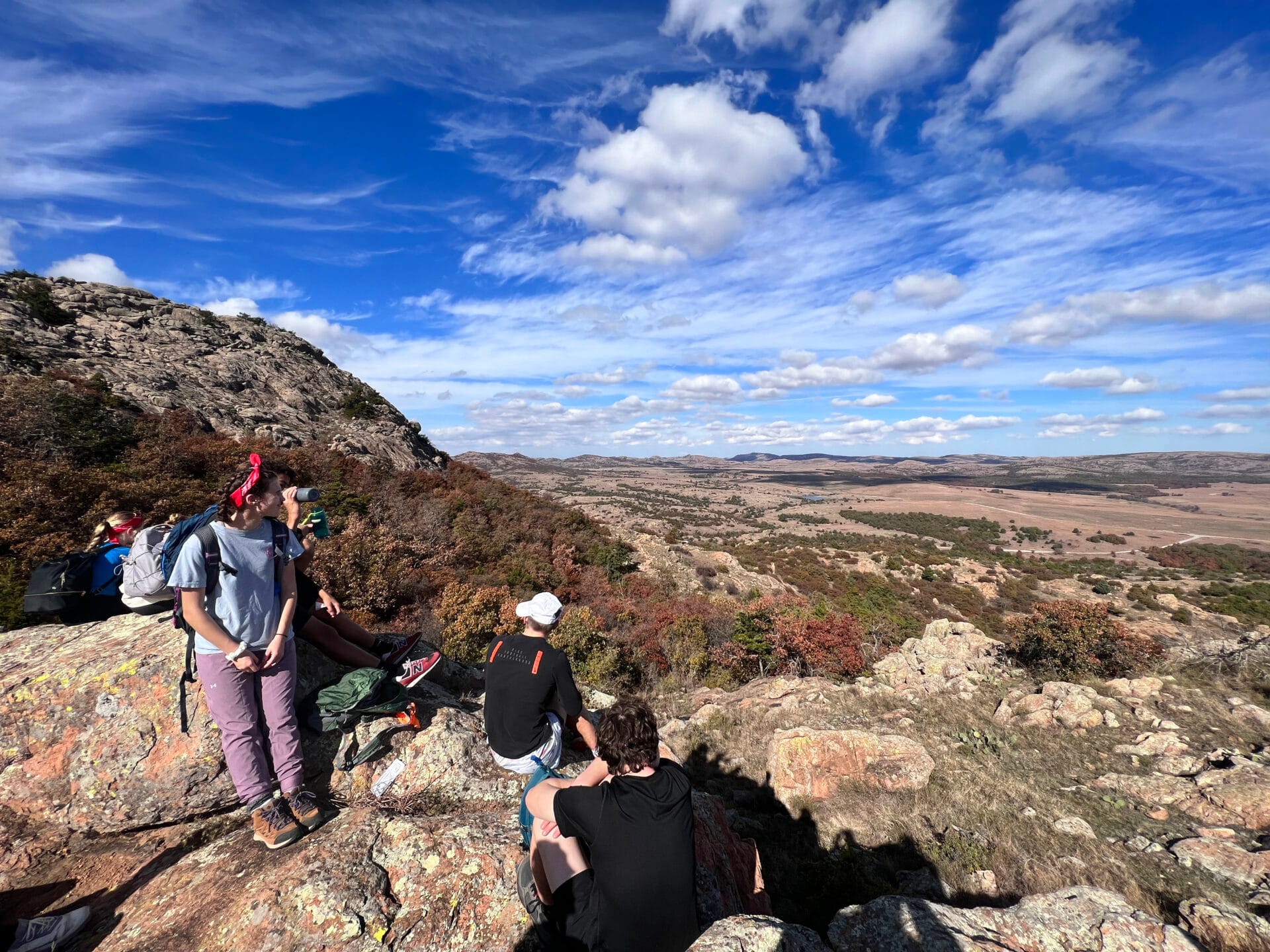
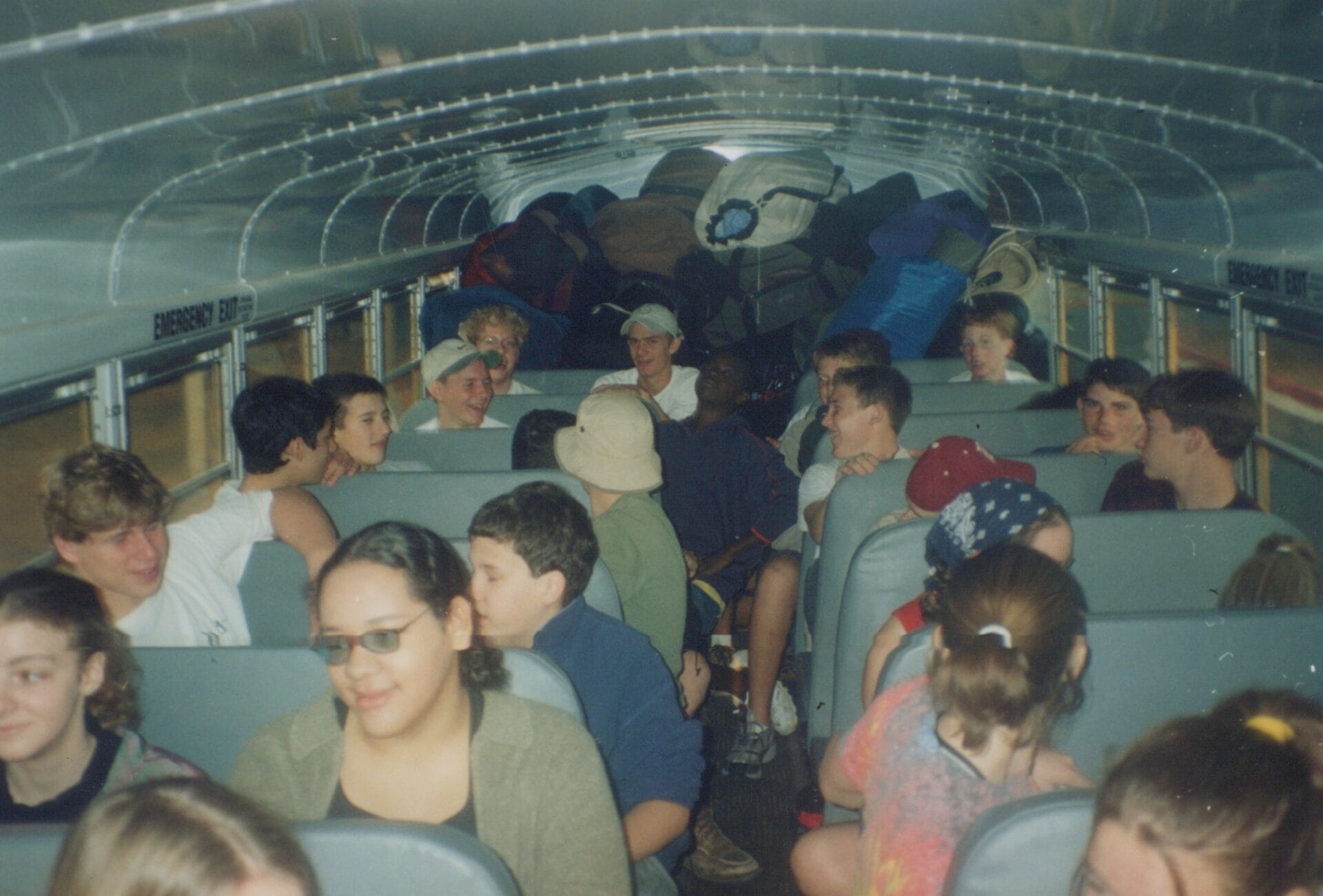
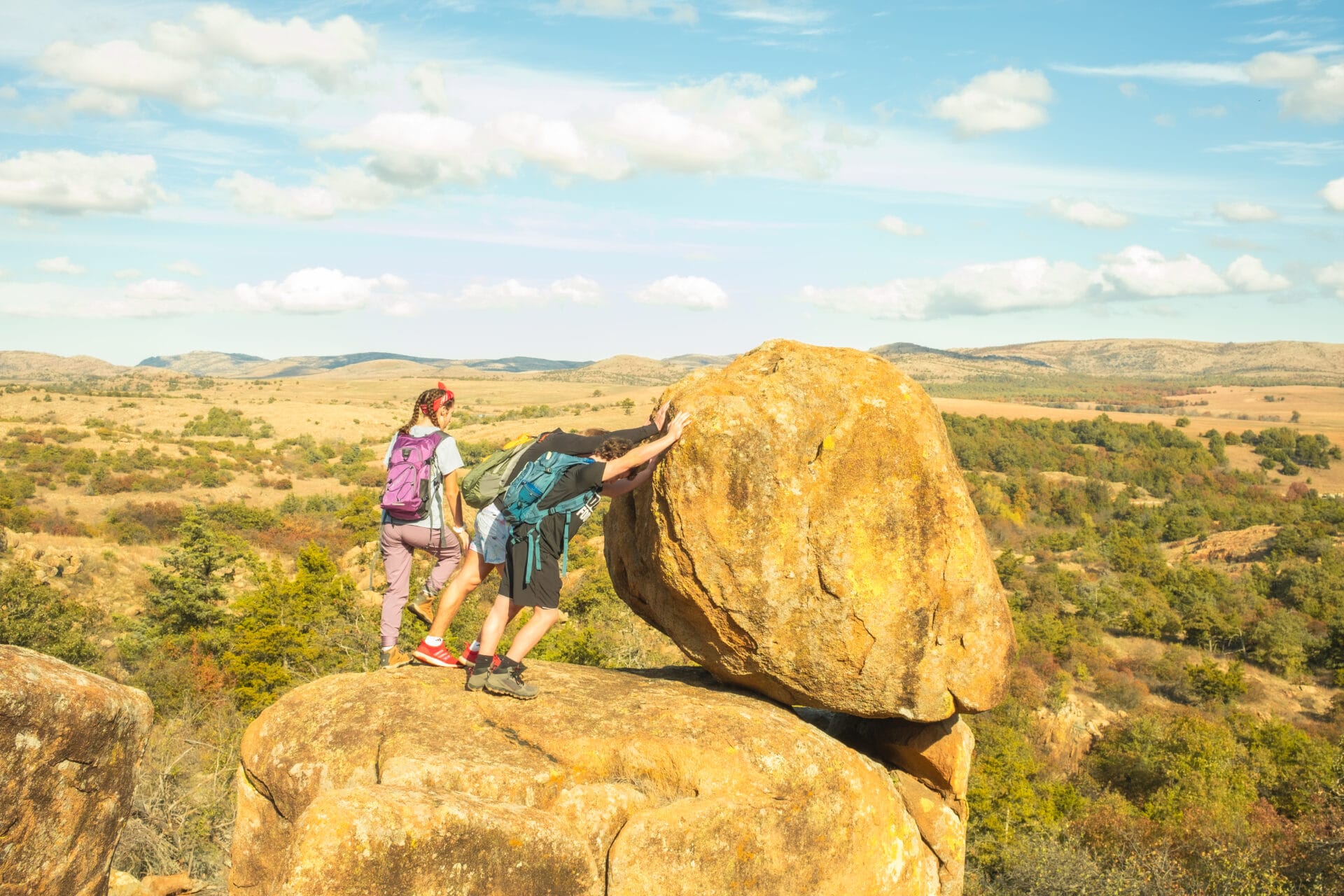
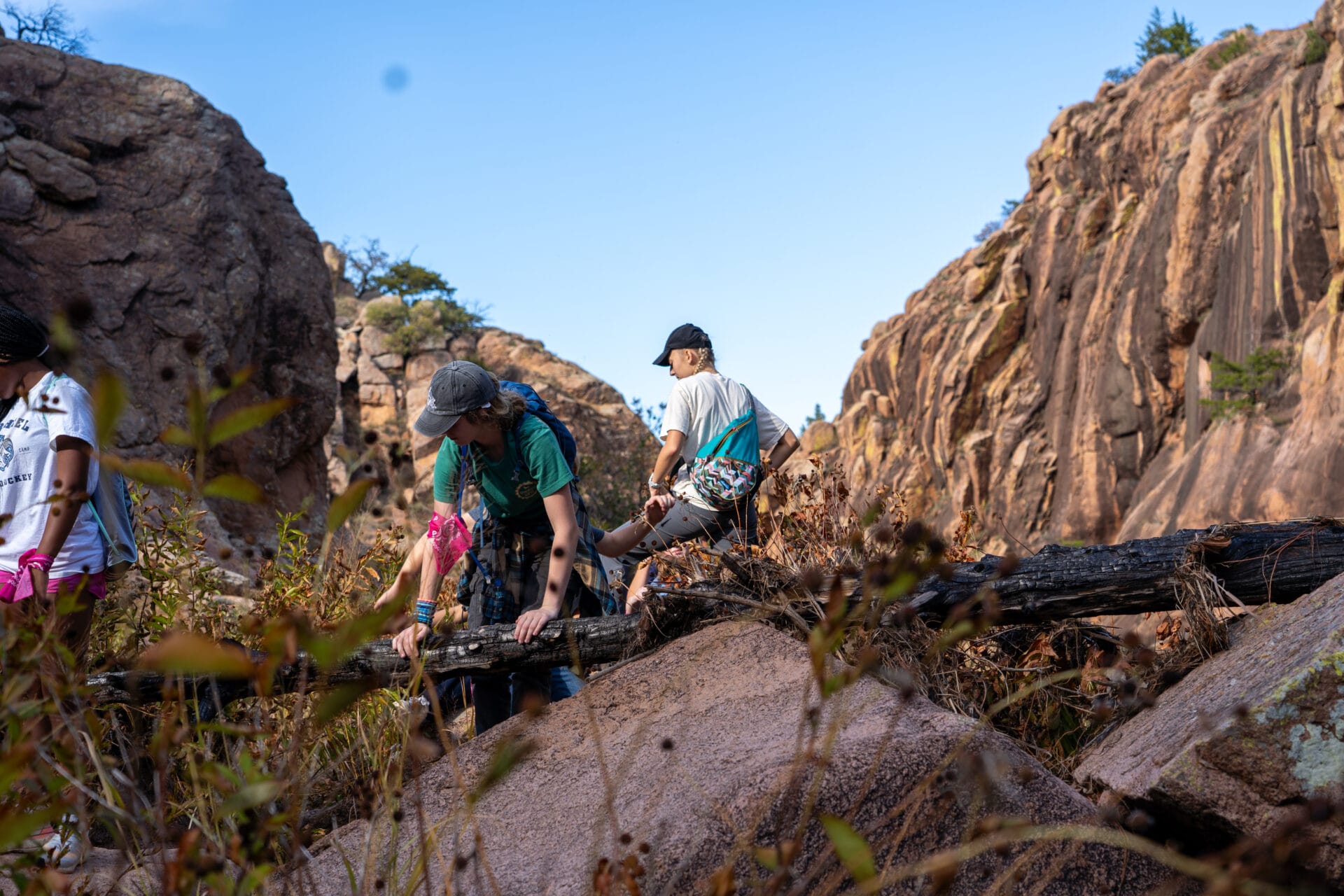
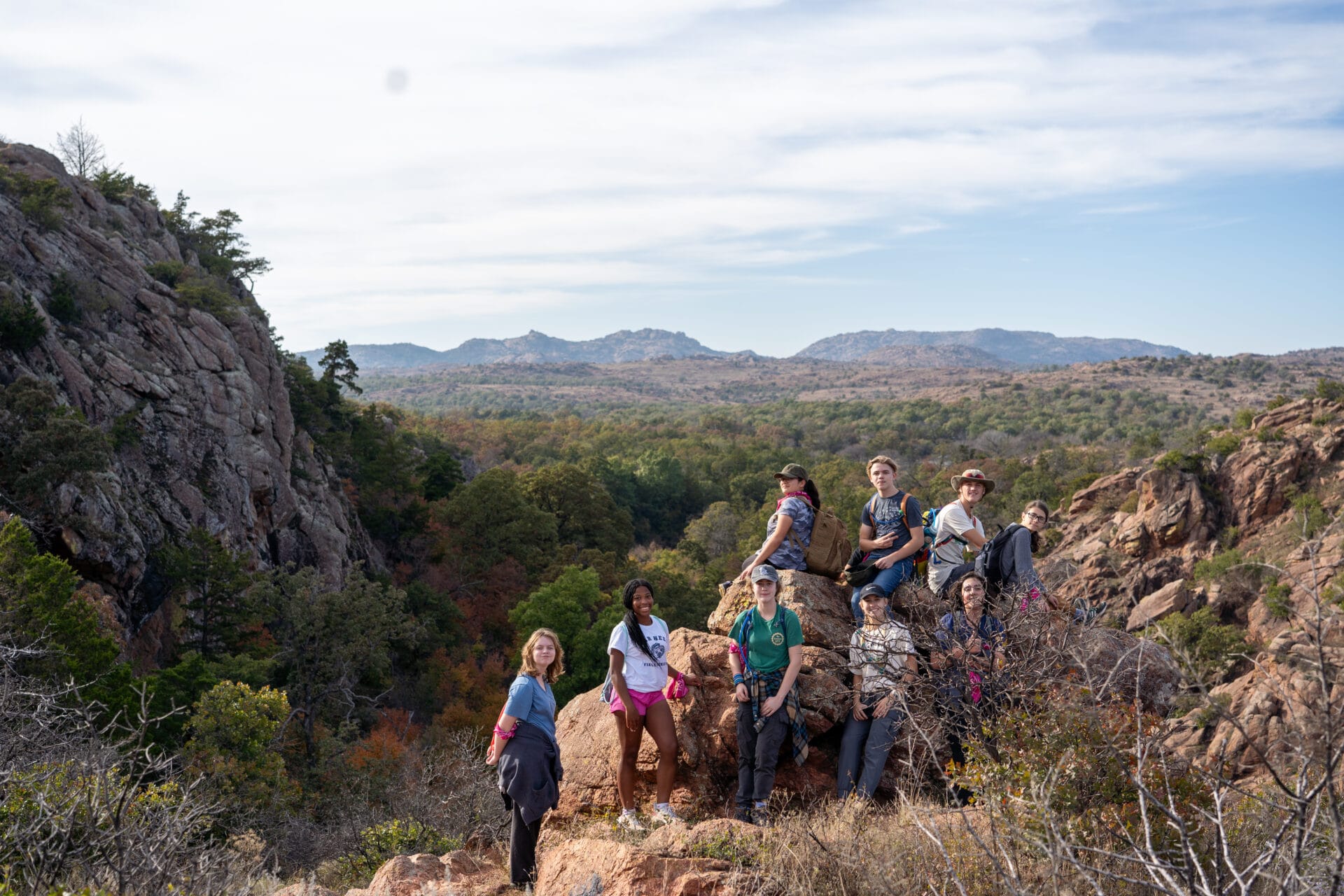
Early Sunday morning, students and faculty will board buses bound for the Wichita Mountains in southwestern Oklahoma as the time-honored tradition of the Freshman Orientation camping trip gets underway for the first of two three-day sessions.
For the freshmen, it’s a time to bond with new classmates, get out of their comfort zones and test themselves in challenging environments. It’s a time to leave mobile phones and other modern luxuries at home. Students need to bring important things like sleeping bags, water and proper clothing. Technology is not on the supplies list. A ball or deck of cards? That’s OK. Personal phones? Definitely not.
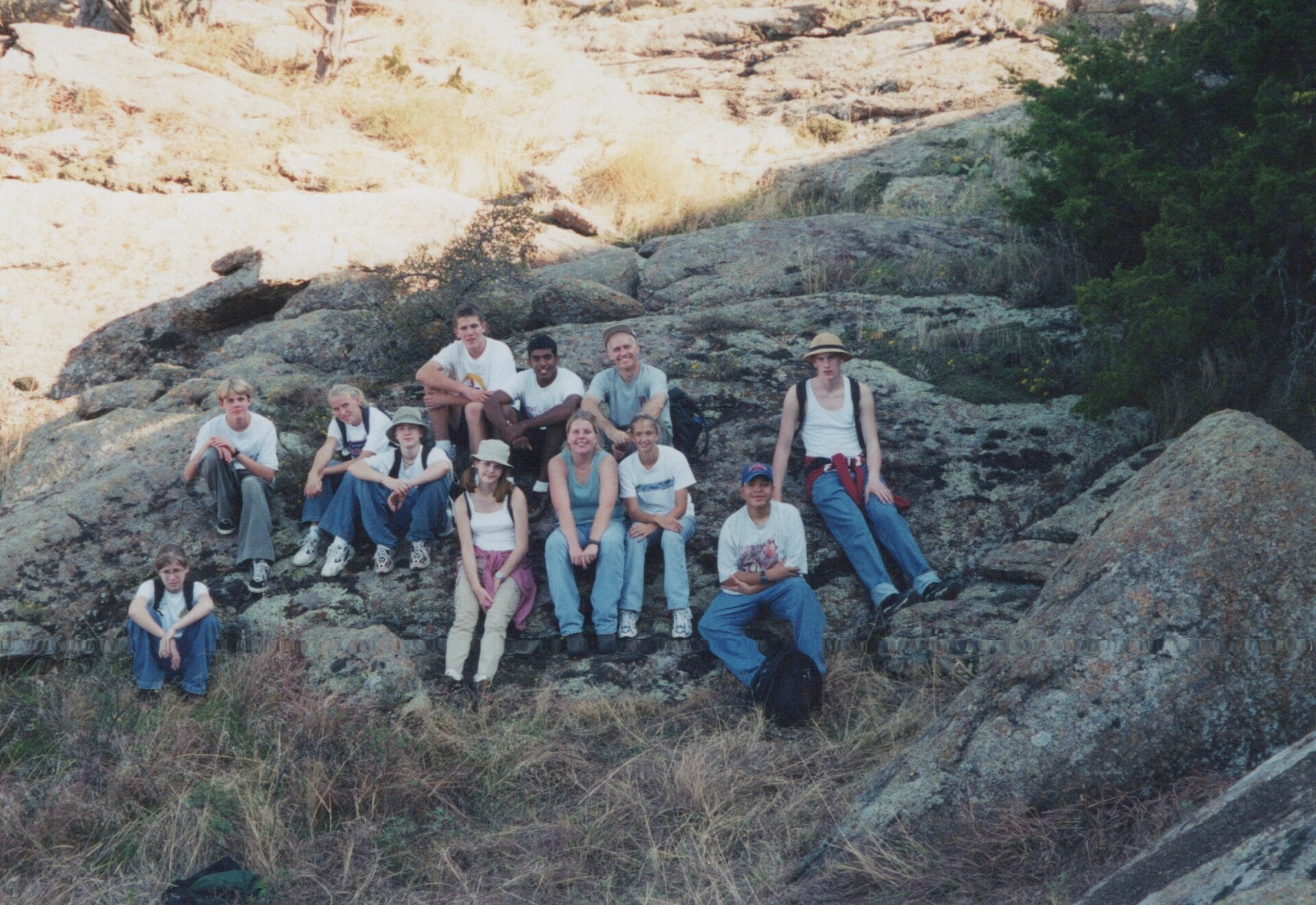
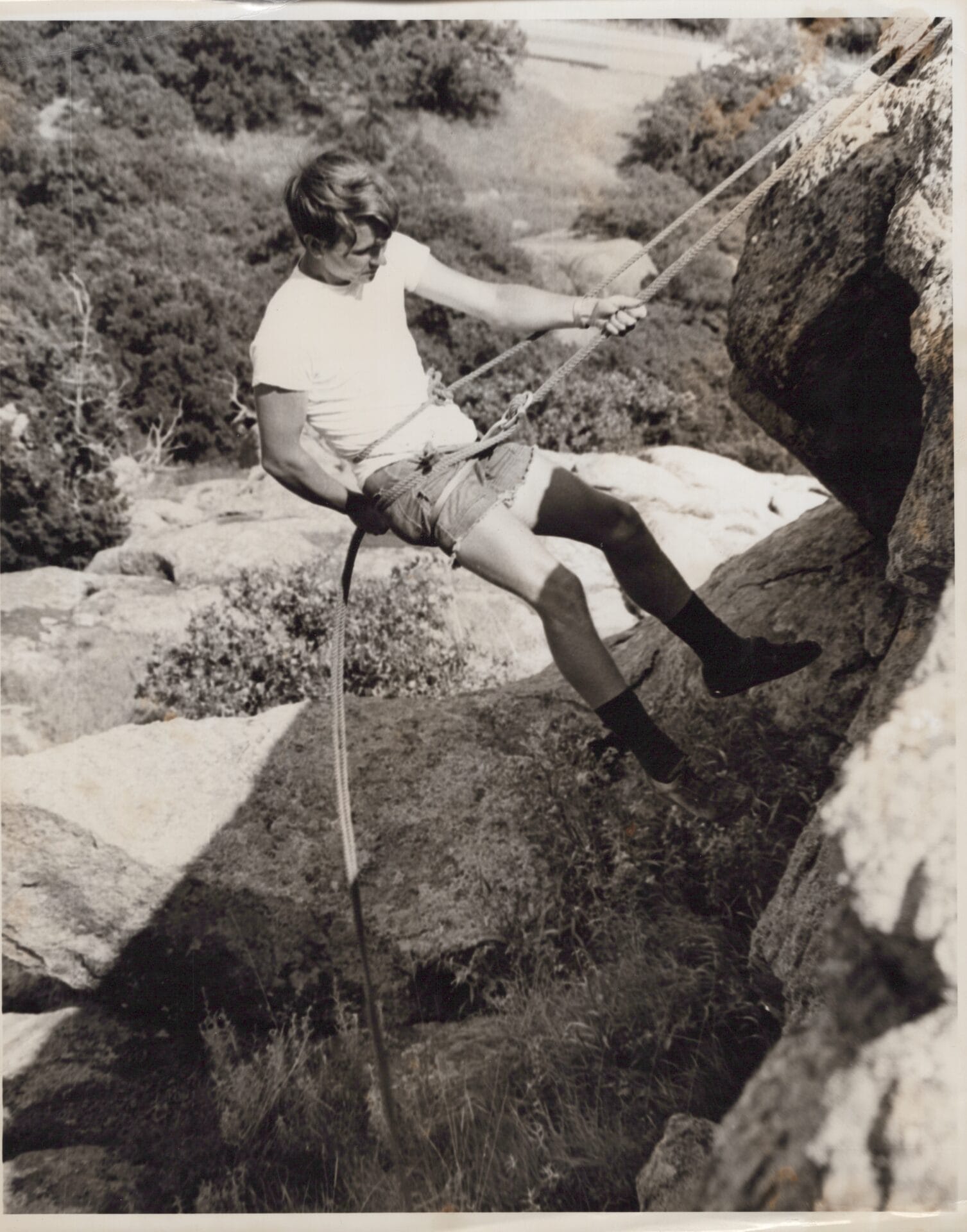
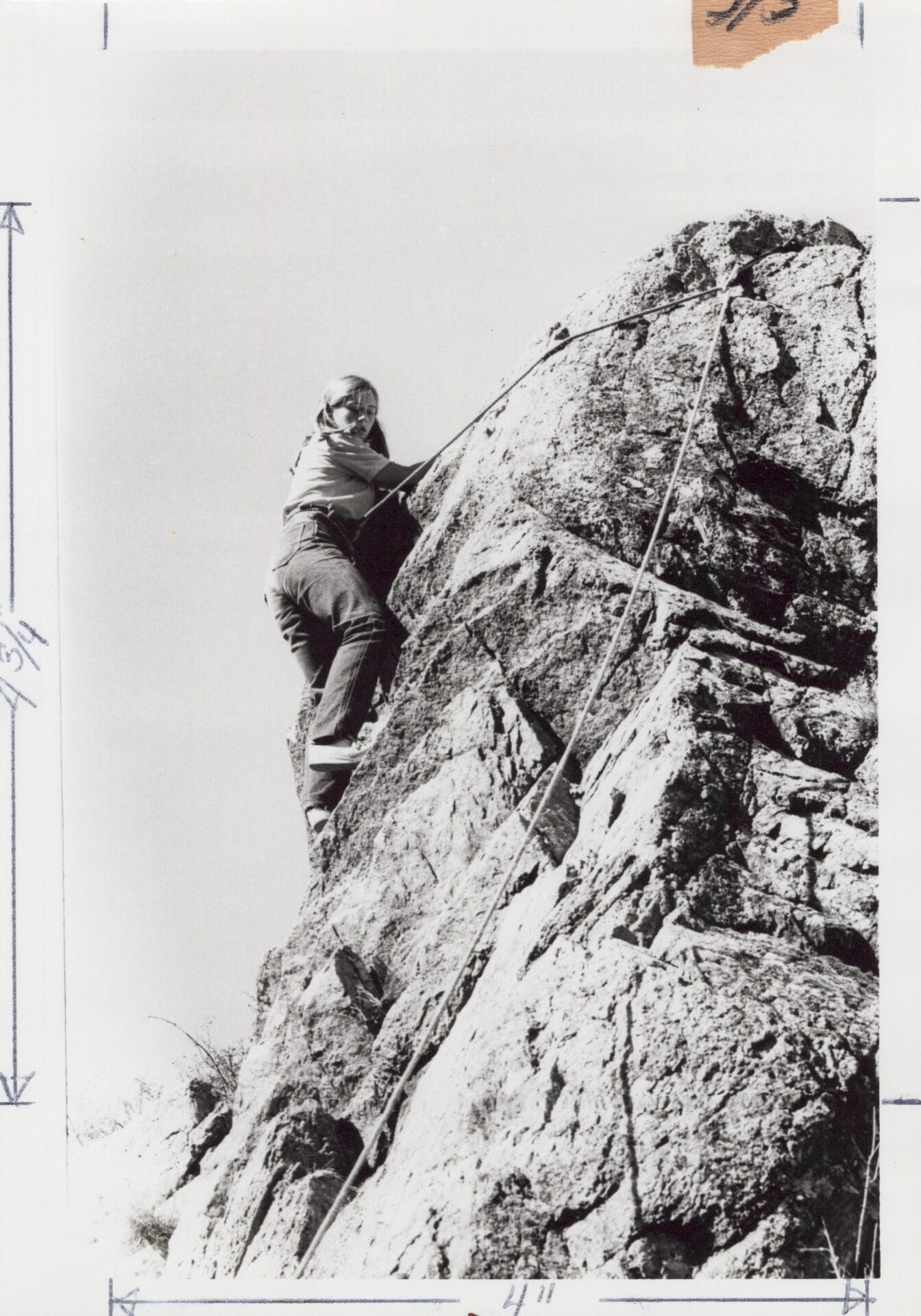
The trip to the Wichita Mountains dates back to 1972, when a small group of Holland Hall faculty began taking hiking trips. Teachers like Doug Bromley, Gene Aker, Judy Harrison and Dennis Calkins enjoyed the outdoors. Those faculty-only trips lasted a few years, until the Outing Club was formed and 10 to 12 students began tagging along on the trips. It wasn’t Freshman O yet, and it wasn’t mandatory for all freshmen to attend.
“We did it for a few years,” said Bromley ’66, “and then decided that what we really needed to do was just have all freshmen, like, a Freshman Orientation program, in August, a couple of weeks before school starts, for bonding of the freshman class, and also for teaching the values that we thought living in the outdoors and taking care of yourself while following group cooperation provided. We thought that kind of stuff would be really valuable. So, Gene Aker and I and Dennis Calkins and Judy Harrison, we got the school to give us some money and permission to haul the upcoming freshmen down to the Wichitas.”
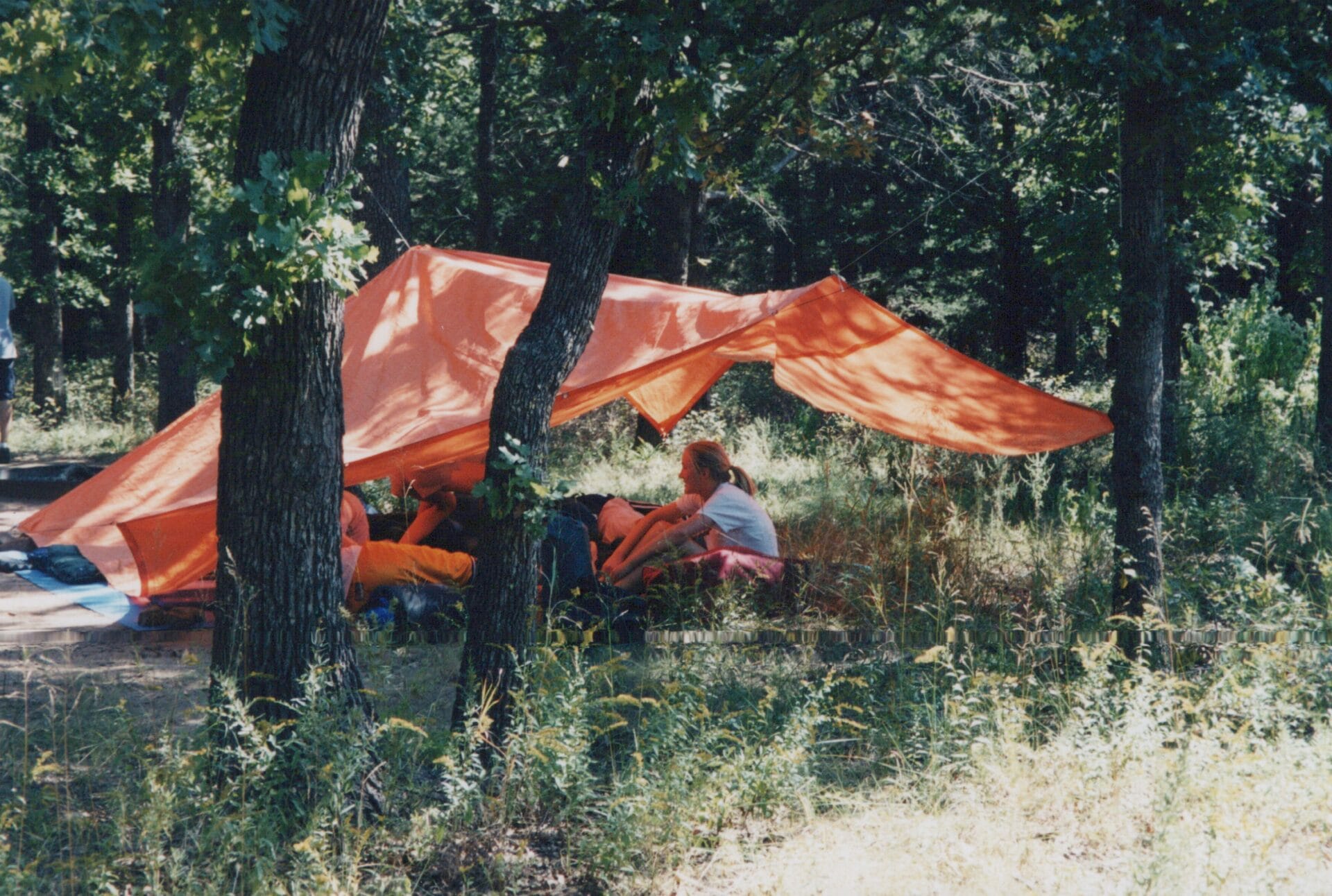
Each student group is given a tarp and a rope to build a basic shelter. Students also have access to a “changing tent.”
“We’d give them a 12×14-foot tarp, a bunch of string and say, ‘Go make a shelter,” Bromley said. “So they’d get under some big trees and stretch their tarp out. They slept side by side like sausages packed under this tarp. When we get a huge thunderstorm and when water starts running under the tarp, you just got wet, that’s all there is to it.”
After nearly a decade of the Outing Club taking kids to the Wichitas every year, in 1981, it officially became known as Freshman Orientation, and every freshman was required to attend.
John A. Bird was Head of School from 1974 to 1984. It wasn’t his idea to make it mandatory for all freshmen, but he supported the idea. Having also gone on some trips, he saw the difference it made with students.
“It’s something that all kids could benefit from,” Bird said this week from his home in Maine. “There were kids who went kicking and screaming, but came back having enjoyed themselves. They felt that sense of accomplishment. Some might have been moaning and groaning but they had a feeling of confidence afterwards.”
Like any tradition, the activity has evolved. The trip used to be six days and took place before school began in August, but the brutal Oklahoma summers eventually prompted organizers to move it to September/October.
Even with the move to the fall, battling the Oklahoma weather is still part of the trip’s charm. When Wyatt Ivins ’28 took his Freshman O trip two years ago, it rained on the first night, forcing him to seek shelter in the changing tent (he got wet there, too). Then his group endured threats of a tornado and spent their second night on buses and U-Hauls.
“It wasn’t too bad,” Ivins said. “All things considered, I really enjoyed it. You know, and honestly, it could be worse, right? I don’t look at this in a bad way. Looking back on it, yes, it’s funny. But, even in the moment, it’s just, it is what it is. You take it and roll with the punches.”
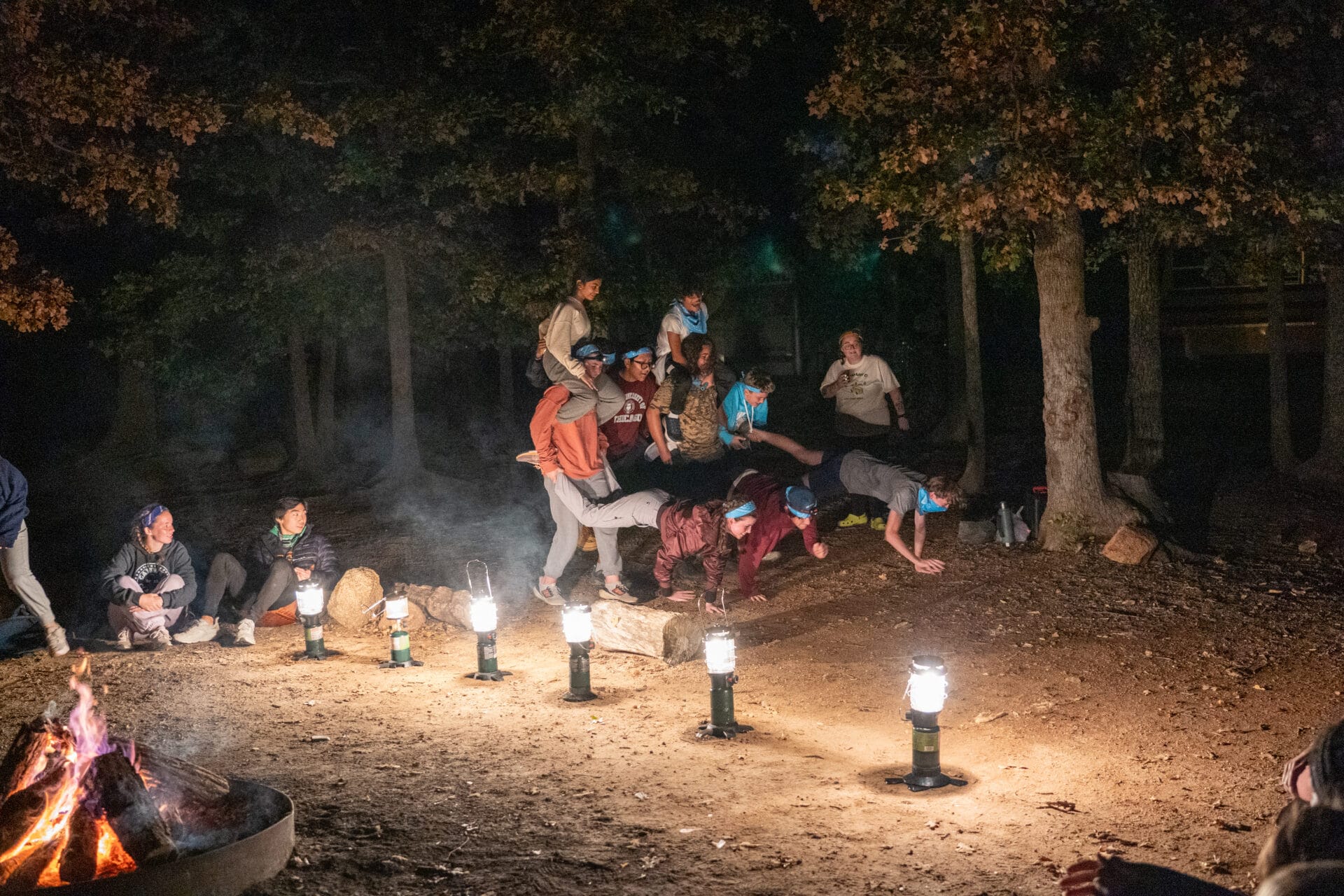
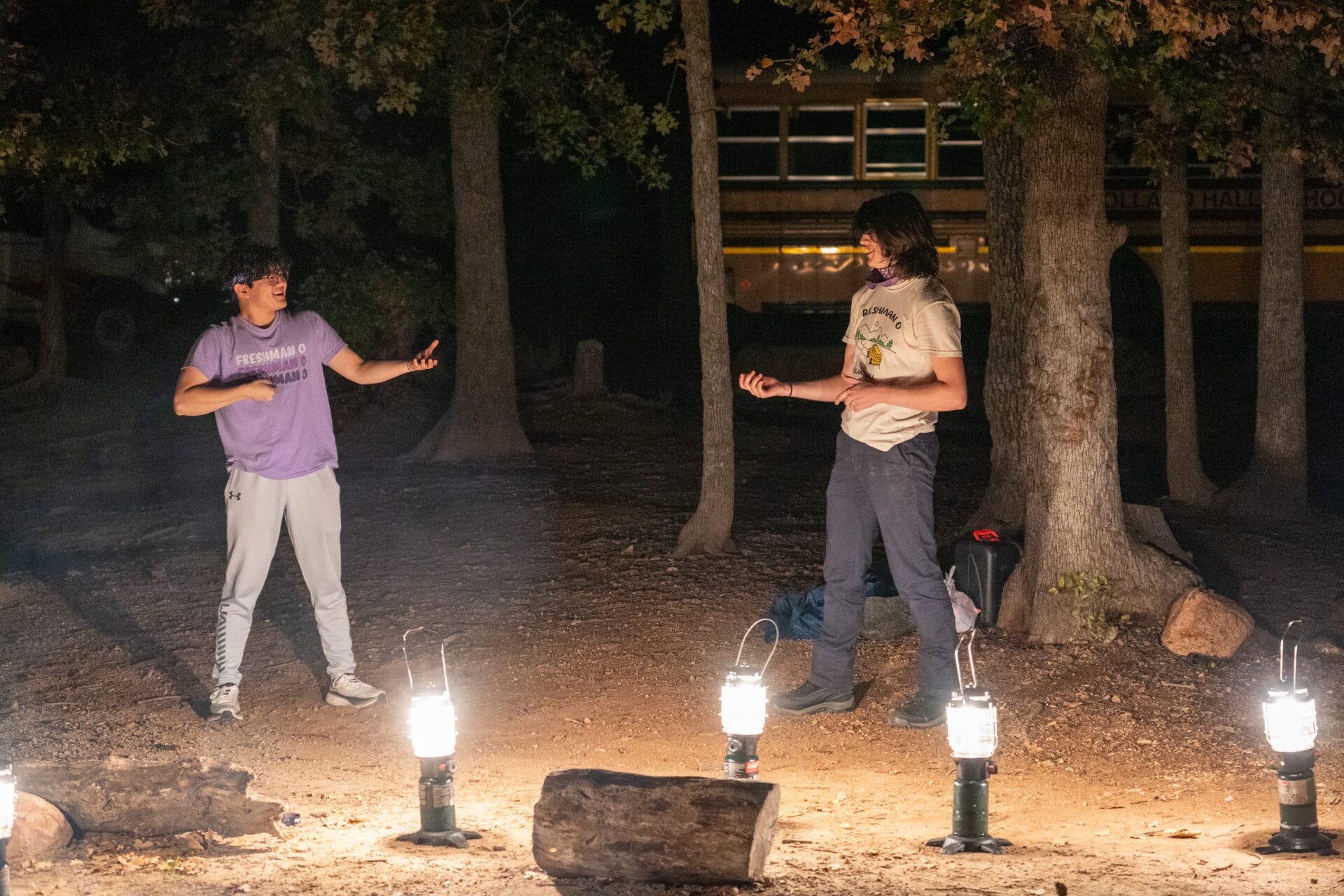
But there’s more to Freshman O than hiking mountains and dodging storms. Each group of students, called patrols, will perform a skit. On the final day, students write letters to their future selves that will be returned to them near their graduation. The students also cook meals.
Head Chaplain Mother Sarah Smith is running Freshman O for the second straight year, and it’s her third year participating in the trip.
“I love the outdoors, and I especially love helping students understand the importance of Creation and what it means to be good stewards of the land. The outdoors is a gift to us — not only to enjoy, but also to care for and protect,” she said. “I also think (Freshman O) provides an incredible opportunity for students and faculty to get to know one another on a deeper level, building community, trust, and a shared sense of responsibility for one another and the world around us.”
This year, around 85 freshmen, 24 student leaders and 14 faculty leaders will make the trip.
Students will arrive on campus at 6:30 a.m. Sunday for a 7 a.m. departure. After arriving around 11 a.m., they’ll set up camp before hiking, eating dinner, performing skits and playing games.
Monday will be a full day of hiking, followed by dinner, more skits and games. On Tuesday, campers will eat breakfast, pack up, write their letters and board buses for the drive home.
“When we get back from the trip, I can feel the bond of new relationships with the students,” Mother Sarah said. “They say hi to me on campus and tell me how much fun they had. The relationships the experience builds are very meaningful to me, and I think it sets the freshmen up to have a deeper community experience at Holland Hall. I’m honored to be a part of that legacy they will remember for the rest of their lives.”
And next year, this tradition will no doubt carry on.
“At a school like Holland Hall, you understand that there are some traditions that are like 100 years old,” Bromley said. “Am I surprised that Freshman O has lasted? No. The parents and the grandparents of kids who did this 50 years ago remember it, and they are happy to support the idea that their kids and grandchildren get to do the same thing.”

Click the menu item to navigate to this page