
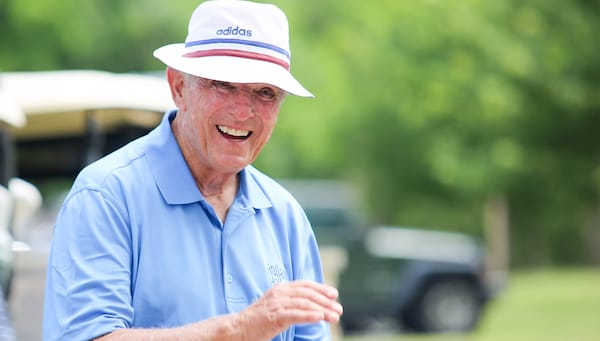
It is with great sadness that we are letting you know about the passing of beloved Holland Hall icon Coach Charlie Brown.
Charles H. Brown, a defining and beloved figure who had an enduring impact at Holland Hall for more than 60 years, died Saturday, Aug. 22. He was 89.
Over his career, Charlie played critical roles in thousands of students’ lives as head football coach, chemistry teacher, dean of students, athletic director, advancement officer, and director of stewardship.
MEMORIAL PAGE: Alumni, friends, and colleagues have shared memories and stories to a Charlie Brown Memorial Page, which can be seen here, http://gotohh.org/cb-
Of all his considerable accomplishments, he was most proud of all the students he attracted to Holland Hall. He wanted all kids to have a chance at a Holland Hall education. Calling the more than 200 students he helped “treasures of my career,” he established The Charlie Brown Endowment for Financial Aid in 2021. It became his life’s mission, and he worked tirelessly to raise money for the endowment.
His impact on the culture of the school — and his zeal for making it as affordable for as many kids as possible — cannot be overstated.
“He remains the heart and soul of our alumni base, our alumni board, and our alumni parents and grandparents,” said former student and longtime friend Christy Utter ‘92, who now serves as a coach and a middle school chaplain. “He spent his life working tirelessly for Holland Hall. We are who we are because of his brilliant mission to make Holland Hall accessible for any and everyone.”
Despite multiple retirements — from coaching in 1999, teaching in 2008, and Advancement in 2023 — he remained a passionate advocate for Holland Hall, raising money and engaging alumni from his office in the Walter Arts Center. Despite a cancer diagnosis, Charlie spent his last months doing the things he loved most, even stopping by campus to write thank-you notes on his way to a gin rummy lesson with his grandson.
He had continued to run the school’s annual golf tournament, hosting the most recent one in May. He didn’t start the event, but it became his project when he moved to the Advancement Office. It’s been a consistent revenue boost for special athletic projects like the new field hockey turf ever since — with $595,000 raised in the last 20 years.
“I told myself I would stop doing it as soon as it wasn’t fun. But it continues to be fun,” he said recently.
As much as he loved coaching, he was equally proud to be a teacher. He taught chemistry at Holland Hall for 42 years.
“Since 1966, he has impacted every student who came through the upper school at Holland Hall whether they know it or not. Charlie had many roles at Holland Hall but at his core he was a kind and compassionate teacher and coach,” said retired coach and teacher Tag Gross ’87, who Charlie hand-picked to succeed him as football coach.
Charlie was born in Crescent – a small town in north-central Oklahoma – in 1937. He graduated from Crescent High School in 1955.
A quarterback in high school and member of the 1954 Crescent team that won a 2A state title, he earned a football scholarship to Southwestern State College (now Southwestern Oklahoma State) but only stayed there a few months before enrolling in Central State College (now University of Central Oklahoma).
Between 1957-67, he earned a bachelor’s degree from Central State and a master’s degree from the University of Oklahoma.
In fall 1960, he got his first teaching job at Casady High School in Oklahoma City as a middle school science and upper school chemistry teacher and assistant football coach and later head baseball coach.
In 1965, as a 28-year-old, he came to Holland Hall as a teacher and assistant football coach. The Holland Hall campus was still located at 26th Street and Birmingham Avenue, had 142 students and had yet to play a football game. A year later, he was named head football coach, a position he held for 34 years.
Charlie taught more than Xs and Os. He wanted to mold his players. “They were all my boys,” he wrote in his 2023 autobiography, “The Lucky One.”
Charlie was 27 when his father died. That inspired him to stress this to his players: “Never take anything or anyone in their lives for granted, as I had my father,” he said in “The Lucky One.”
He would also offer messages like: The only reason for education is so you can discover your passion. He told his kids to never be afraid to fail but be scared of not trying.
He learned from his players, too. A defining moment in his career came in 1975 when, following a tough loss, players threatened to quit football because they felt he placed too much emphasis on winning. Football was no longer fun, some of his players told him.
That led him to change his approach and he called it a “new beginning.” He became more positive, more reassuring. He made football fun again.
“For the next 22 years, until I retired from coaching, I always assembled my teams on the sideline, prior to the start of practice, and asked one question: ‘Are we going to enjoy practice today?’ … This attitude even spilled over into my chemistry classes. Every day, at the beginning of class, I’d ask the students, ‘Are we going to have a good day today?’ It’s the same question I still ask myself every morning of my life.”
In 1968, he became the school’s first-ever dean of upper school students. A few years later, he was named the school’s athletic director, a position he held until 2006.
As head football coach from 1966-99, Brown’s overall record was 199-116-5 and his teams won seven Southwest Preparatory Conference championships. In 1995, he enjoyed his only undefeated season at Holland Hall.
From 1972-1984, he served as president of the Southwest Preparatory Conference. He’s also a member of the Oklahoma Coaches Association Hall of Fame. Today, the Dutch football team practices on Charles H. Brown Field.
In 2023, he was honored with a Lifetime Achievement Award by the Tulsa World. Read that story here.
“I have been an extremely lucky man,” Brown told the Tulsa World then. “I watched that Lou Gehrig (movie) where he makes that speech in Yankee Stadium and that’s how I view myself, when you look at the sequence of things that have happened in my life, there’s no other way to explain it.”
At Charlie’s request, in lieu of flowers, all memorial donations should be made to The Charlie Brown Endowment for Financial Aid.

Click the menu item to navigate to this page
Sarah Smith
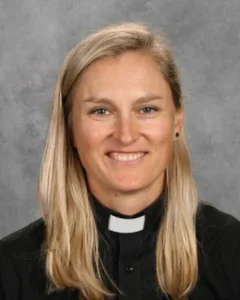
Holland Hall Chaplain Sarah Smith joined Holland Hall in 2023 after coaching at independent schools in Oklahoma City, then leading her own parish, before spending time at the Episcopal Diocese of Oklahoma.
She holds degrees from Notre Dame and Vanderbilt.
A sixth-generation Oklahoman who graduated from an independent school, she is uniquely qualified to teach religion courses and offer pastoral care at Holland Hall.
Christy Utter
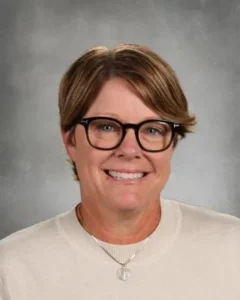
Christy serves as the Middle School Chaplain in addition to her role as head field hockey coach. A 1992 graduate of Holland Hall, Utter coached at the University of Louisville and Brown before returning to Holland Hall.
She holds degrees from the University of North Carolina and the University of Louisville.
Her mission as a chaplain is simple: Helping students to understand the consequences of their choices, helping them to develop a strong moral compass, and guiding them as they lead of life of loving others with compassion, no judgment, and understanding and appreciating the differences in others.
Kristin Lees
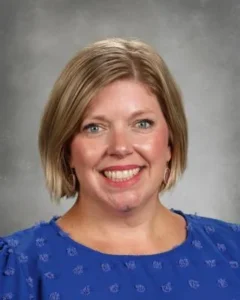
Kristin serves as the Primary School Chaplain and is instrumental in teaching the Second Step curriculum, which promotes social and emotional skills in children. The program fosters and builds skills related to empathy, communication, problem-solving, and emotional regulation.