Explore Upper School
The Upper School prepares each student for success by sharpening the ability to make sound decisions, solve difficult problems, cultivate healthy values, and foster independent critical thought. Students engage in a varied and challenging program within the liberal arts tradition.
A Day in the Life
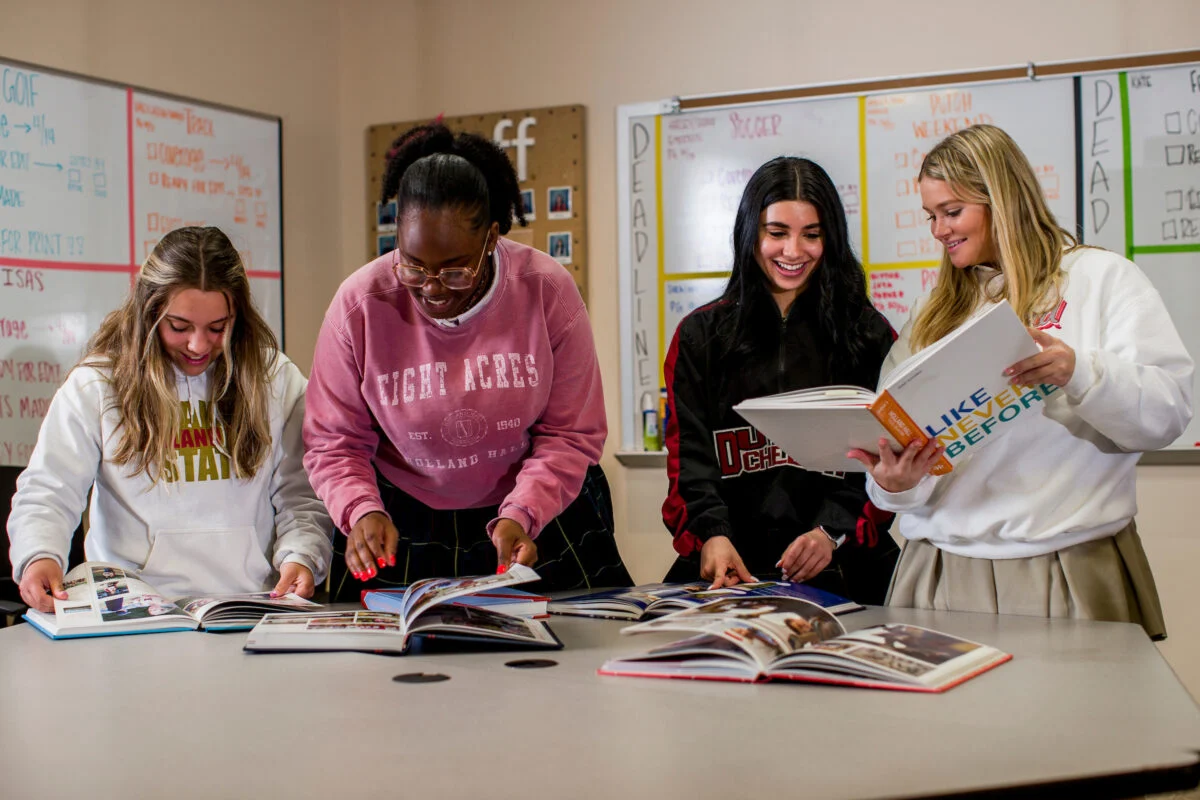
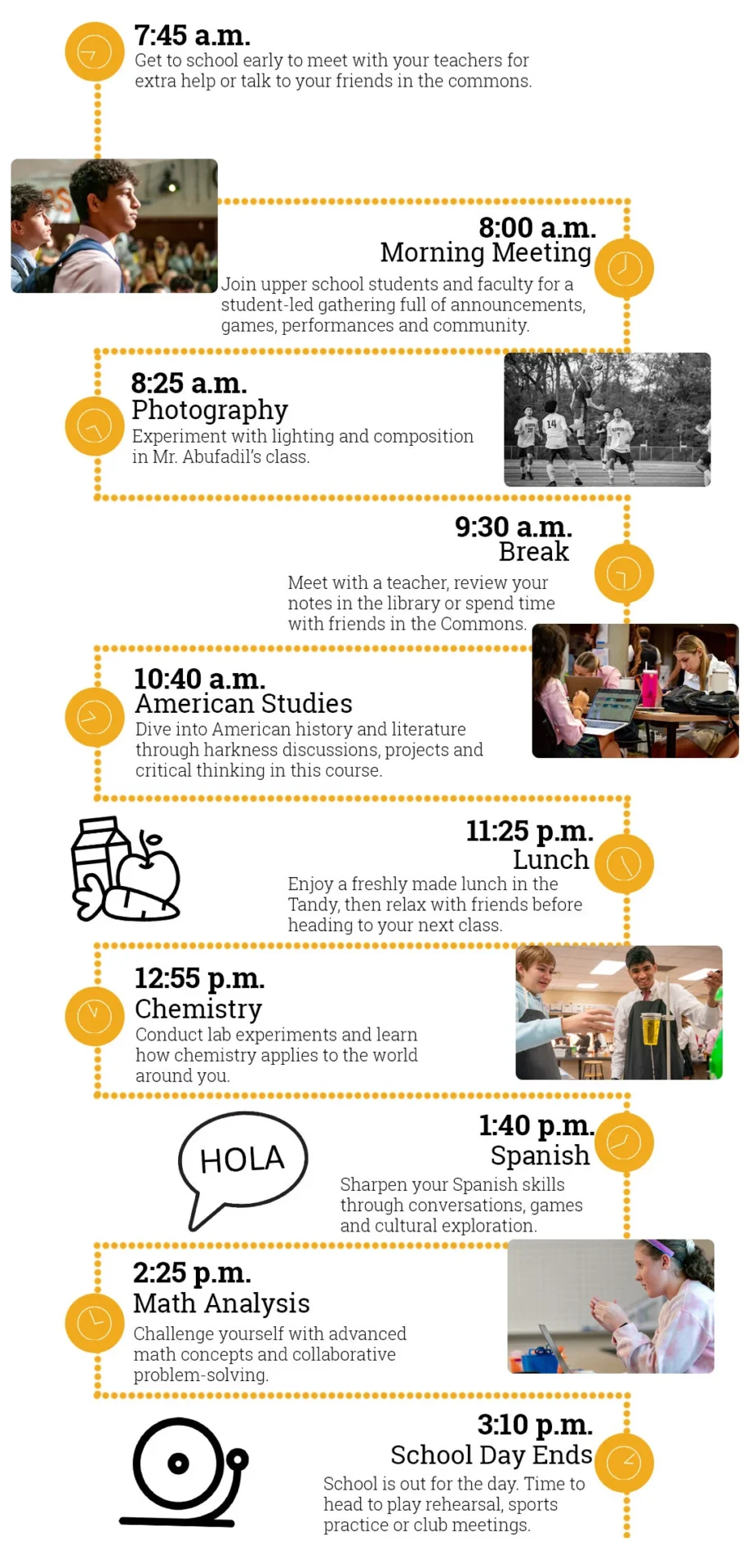
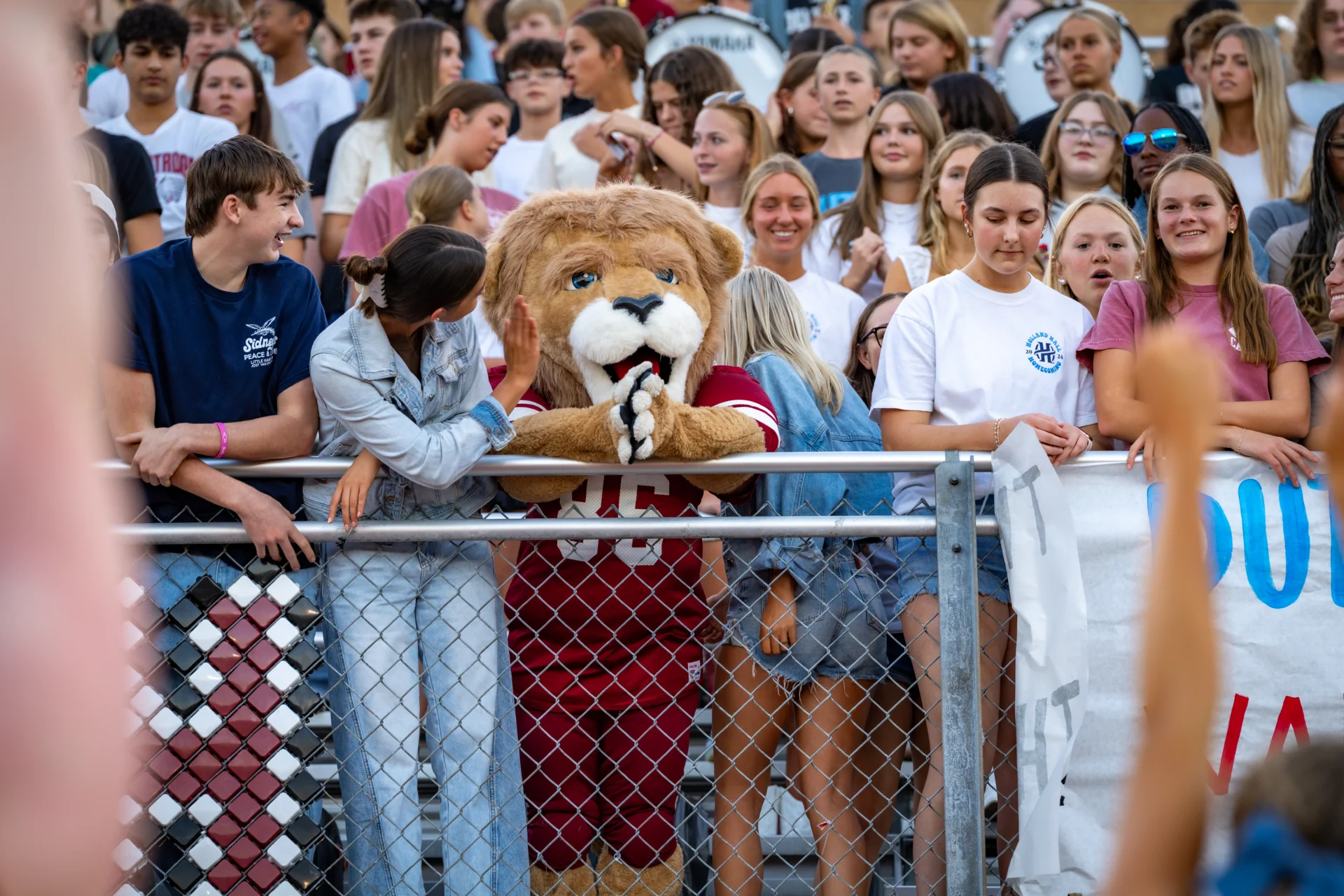
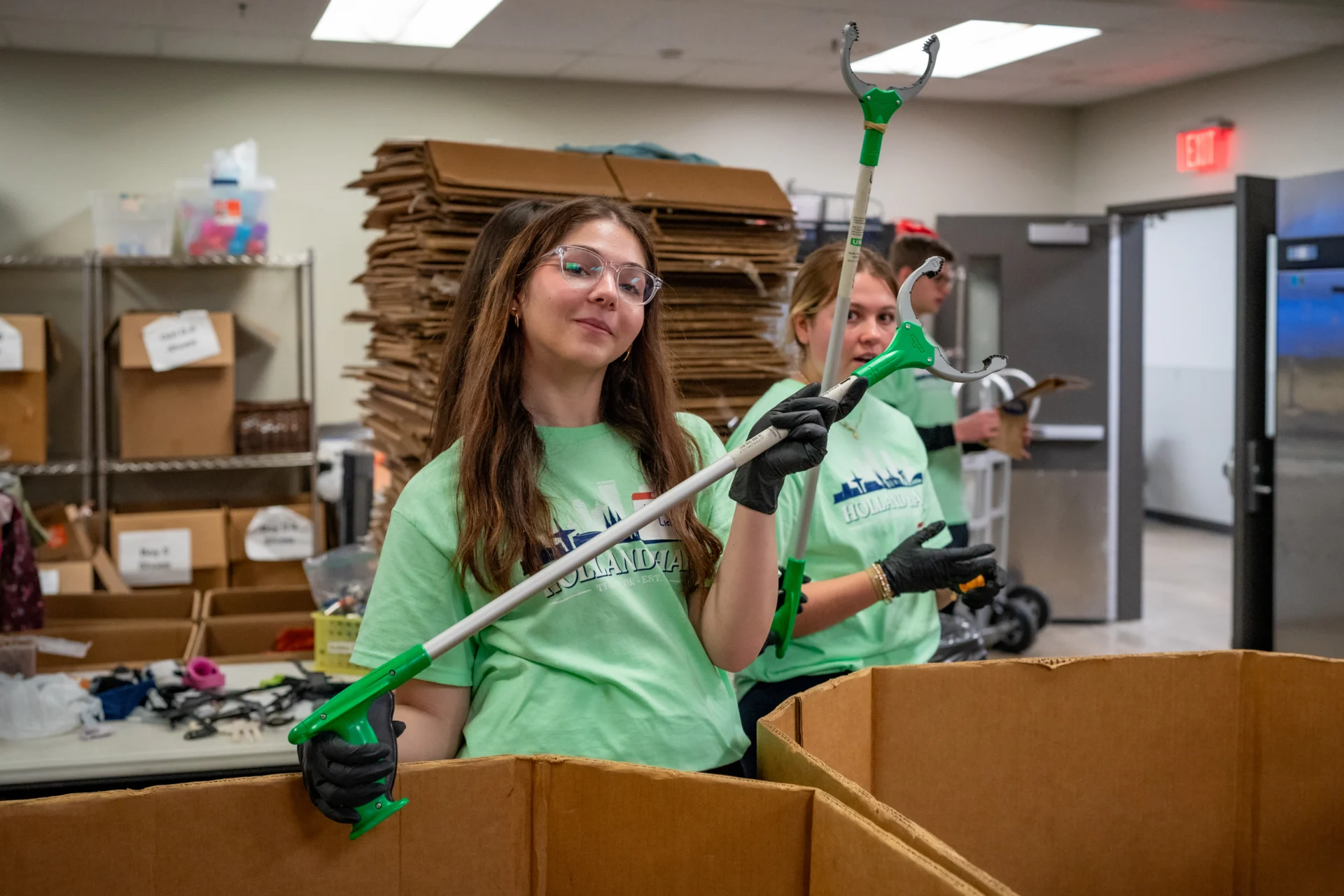
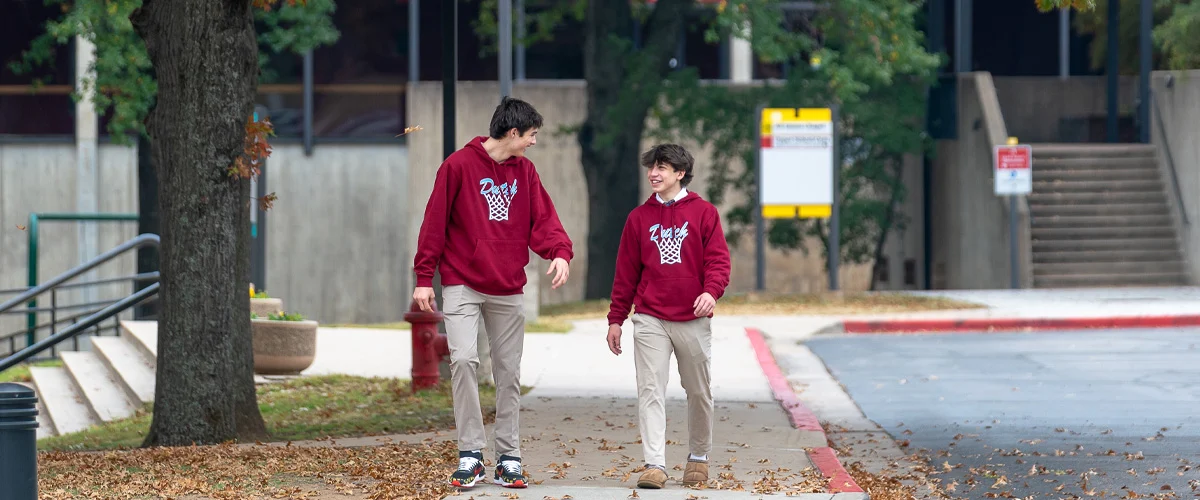
Every day begins with Morning Meeting — a time for the whole Upper School community to come together for announcements, celebrations, and fun. An innovative schedule allows for unscheduled time between classes, which can be spent on homework, pursuing extracurricular activities, or meeting with faculty members or friends. The day ends with athletics — whether it’s yoga, dance, or basketball practice.
Upper School Curriculum
The English curriculum is structured to foster intellectual growth by emphasizing the essential language skills of reading, writing, listening, and speaking, along with a deep appreciation for literature. Students progress through a core three-year sequence that challenges them to read, write, and think critically through the study of both literary classics and contemporary texts that mirror the human condition.
The Mathematics Department focuses on developing a student’s ability to select and use appropriate methods for problem-solving by studying various branches of the discipline. Students must complete three credits (Algebra I, Geometry, and Algebra II minimum) to graduate, learning to organize, analyze, and synthesize data while appreciating the beauty and logic of mathematics.
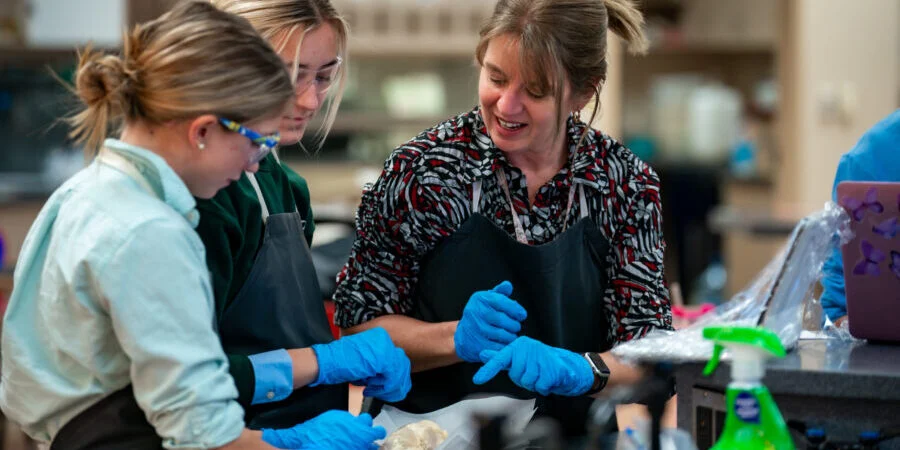
The science curriculum is built on an inquiry approach to learning, instilling the ability to use rational thinking skills through hands-on experience and laboratory investigation. Teachers strive to enhance each student’s appreciation for the natural world and encourage them to pursue advanced electives, which often require strong math skills, leading to advanced college-level study.
The Social Studies curriculum is a gateway to critical thinking and a nuanced understanding of the complexities shaping human societies, preparing students to question assumptions in a globalized world. Students must complete Global Issues, United States History, and American Studies, ensuring they are well-grounded in the Western tradition while appreciating non-Western cultures. Our classes prioritize active student participation, cooperative learning, and discovery.
The World Languages program ensures students become effective global citizens by requiring three high school credits in a single language (French, Spanish, or Chinese). This requirement ensures students reach at least a Level 3 proficiency, easing communication and providing valuable exposure to diverse cultures and geographic locations. By starting early, students can reach the highest levels of study and pursue Advanced Placement exams for college credit.
The Fine Arts department emphasizes the power of the arts to illustrate the human experience, foster empathy, and develop creativity as an infinite resource. The courses are broadly split into Music, Theatre, and Dance, offering a robust, progressive, and performance-oriented curriculum.
The Technology, Media, & Design Department prepares students for an accelerating digital landscape by cultivating the innovative mindsets and technical competencies required for real-world navigation. By integrating design-thinking and project management into the curriculum, students learn to bridge the gap between their personal passions and practical problem-solving. This immersive approach ensures they graduate as future-ready collaborators who can communicate effectively and leverage technology in meaningful service to others.
Religious Studies offers a unique opportunity for both educational investigation and personal exploration of diverse religious and ethical values, beliefs, and traditions. The curriculum is designed to encourage students to freely explore ideas within a supportive atmosphere that enables them to maintain and develop their own religious views and personal values.
The Athletic Department is committed to physical and competitive development. The program goals include encouraging participation in multiple sports and involving all competitive athletes in strength training.
These courses are designed to support students’ personal development, academic transition, and college readiness throughout their Upper School journey. Offerings range from mandatory wellness seminars and SAT/ACT preparation to specialized, multi-semester peer leadership programs in composition.
This required course serves as an introduction to advanced literature and analytical writing, focusing on finding multiple levels of meaning and developing the multi-paragraph literary analysis essay.
A required course that equips students with critical tools to analyze literary and theoretical texts, examining the connections between Identity, Culture, and Power while developing their own emerging voices as writers.
This required, team-taught humanities course synthesizes literature and history using Harkness discussions and a competency-based approach to answer the essential question: "What makes America, America?"
An inquiry-based course that examines the self as an individual and as a construct of society, challenging your thinking through writing, projects, and dialogue to develop a personal, "living" question.
Apply advanced scholarly frameworks and critical theories to unpack the deep cultural and developmental meanings found in literature ranging from fairy tales to young adult novels.
This course examines characters who defy societal expectations to redefine power and identity. By analyzing works from classic authors like Kate Chopin to contemporary voices like Bonnie Garmus, students explore how storytelling critiques gender norms and resists oppression.
Explore the American and global short story, analyzing how masters from Edgar Allan Poe to Chimamanda Ngozi Adichie use this concise form to illuminate the complexities of the human experience.
Use literature and cultural artifacts to explore the complexities of male socialization, the role of competition, and the problematic effects of stereotypical, patriarchal representations of masculinity.
This intensive course introduces the principles, techniques, and practice of the three primary genres of creative writing: fiction, creative nonfiction, and poetry.
Delve into the literature and art that grappled with the disillusionment of the American Dream, examining how transformative political movements impacted artistic expression.
Examine science fiction texts to explore the relationship between the genre and political ideology, using hyperbolic scope to critique and question our own political systems.
A deep dive into Homer's epic The Odyssey and its modern adaptations (The Penelopiad, Circe), investigating how these ancient stories offer truths relevant to the contemporary world.
Develop an empathy-driven question about the world and future, exploring solutions, and initiating real-world action to make an impact through integrative inquiry and research.
Investigate our simultaneous fascination with and fear of haunted people, places, and things, analyzing how cultural anxieties are represented in supernatural fiction and film.
Dedicated to process, this course teaches students to write quickly, fluidly, and fearlessly by learning traditional theatrical approaches rooted in character and narrative structure.
Rediscover the love of reading by using reader-response theory to think critically about yourself as a reader, culminating in the creation of a personal chapbook based on reflections.
Examine the profound influence of music from the 20th century onward on American culture, studying how artists participate in social changes like the civil rights and anti-war movements.
Study the properties of numbers, linear and quadratic equations, and functions, while developing the strong study habits and real-world application skills essential for future math success.
Explore the patterns and properties of shapes, problem-solve geometric puzzles, and connect ideas in two and three dimensions, including an extension to right triangle trigonometry.
Explore relations, functions, systems of equations, and inequalities involving real and complex numbers, using the graphing calculator extensively for graph and data analysis.
A rigorous Precalculus survey designed to expand on previous concepts with a thorough study of functions, an in-depth unit on trigonometry, and an introduction to basic calculus concepts.
This challenging, college-level course examines differential and integral calculus, emphasizing a multi-representational approach (graphical, numerical, analytical) to understanding broad concepts.
An extension of Calculus AB that covers an additional semester of college work, including the calculus of parametric, polar, and vector functions, infinite series, and advanced integration techniques.
Introduce the major concepts for collecting, analyzing, and drawing conclusions from data through hands-on activities across the four conceptual themes of exploring data, planning a study, probability, and statistical inference.
Strengthen your algebra skills and master the basics of trigonometry (including sinusoidal functions) in preparation for Precalculus, with integrated review for the ACT and SAT math tests.
A rigorous, post-AP Calculus BC survey that introduces the differentiation and integration of functions of several variables, vectors, and the geometry of three-dimensional space.
Become financially literate and confident in managing money by covering essential personal finance topics like budgeting, saving, investing, credit, and financing higher education through real-world simulations.
Gain an application-based introduction to statistics focused on producing, analyzing, and synthesizing data through sampling, experimental design, and concepts of probability.
This required freshman course introduces basic physics through experimentation and content mastery, challenging students to plan, build, and operate multiple major physics-based projects.
Investigate compelling natural phenomena to master essential concepts across cell biology, genetics, and ecology, focusing on scientific questioning, data analysis, and communication.
Study the composition and behavior of substances through investigative problem-solving, applying chemical principles to real-world issues like sustainability and personal wellness.
Prepare for college physics by covering a complete core of concepts, emphasizing the ideas behind the equations through discussion, demonstrations, and modern, computer-interfaced lab work.
An advanced, algebra/trig-based course that expands on core concepts (including rotational dynamics) with deeper analysis and a greater emphasis on lab design (with optional AP exam seating).
Explore the dynamic forces that shaped the Earth, reconstructing geologic history through direct lab contact with minerals, rocks, and fossils, often including fieldwork.
This college-level course provides an intensive study of fundamental chemistry concepts, preparing students for the AP exam through advanced topics like chemical kinetics and thermodynamics.
Explore the intersection of molecular biology and medical applications through hands-on laboratory work and the analysis of modern breakthroughs like CRISPR therapies and vaccine design.
Designed for pre-health students, this rigorous course explores the intricate structure and function of body systems through interactive lectures, modeling, and a mandatory multi-week mammalian dissection.
Prepare for college-level engineering and science by exploring the fundamental principles of electricity and magnetism beyond introductory physics. This advanced course covers complex topics including electric charge, Coulomb's Law, and circuit analysis to equip students with the analytical skills necessary for medical or technical careers.
Students merge physics principles with technical fabrication to design and build a competitive robot for the FIRST Tech Challenge. The course utilizes CAD software and Java programming while operating like a professional engineering firm.
Master the foundational principles of analytical chemistry by using spectroscopic data to deduce molecular structures and applying quantitative techniques to identify chemical samples.
Focus on the fundamentals of electrical circuitry and the engineering design process through project-based learning with Arduino microcontrollers and lab instrumentation.
Explore the unique bonding characteristics of the carbon atom and the reactivity of organic compounds.
Study the universe, exploring stellar evolution, our solar system, and galaxies through night-time observation labs, including stargazing and telescope use, culminating in a final research presentation.
This required, skills-based course explores a range of human societies and global challenges by borrowing from various social science disciplines to help students form independent conclusions about the emerging 21st-century world.
A required, discussion-driven course that studies American history from the pre-colonial era to the present, designed to give students a college-level experience in analyzing historical evidence and major themes.
This required, team-taught humanities course uses Harkness discussions and primary sources to synthesize Native American, African, and European cultural perspectives and answer: "What makes America, America?"
This interdisciplinary course provides a comprehensive understanding of American governance by exploring contemporary issues like social justice, environmental policy, and the media's role in shaping public opinion.
Examine the broad economic, cultural, and political origins of this defining conflict, focusing on issues of slavery, states' rights, and the leadership of Abraham Lincoln to understand contemporary political divisions.
Examine the history and evolution of domestic terrorism in America from the late 19th century to the present, utilizing primary source analysis and independent research to understand the catalysts of extremist acts and the future prospects for prevention.
Explore the evolving identity of the American woman from colonial times to the present by analyzing the historical, economic, and political forces that shaped diverse feminine experiences.
Inspect literature and film to understand the intense global anxiety created by the dawn of the Nuclear Age, exploring the conflict between the US and the Soviet Union as a deep psychological struggle.
Examine the origins of our modern world through environmental and geographic lenses to understand how factors like continental axes, disease, and major technological revolutions shaped the human story.
Examine America’s foreign policy towards the Global South since 1945, analyzing primary sources to determine whether "national security" creates or subverts a democratic world order.
Students will critically analyze pivotal moments in American history by examining iconic primary sources, ranging from landmark legislation and speeches to influential poems and essays.
Investigate the origins and legacy of the American Revolution by examining how foundational concepts of liberty and resistance were experienced by both the architects of the nation and the everyday citizens who lived through its formation.
By tracing the historical and mythic exploits of archetypal figures ranging from Daniel Boone and Sacagawea to Sitting Bull and Bass Reeves, this course examines how the American West evolved from a symbol of frontier democracy into a complex narrative of both innovation and tragedy.
This course explores the American narrative through the essential perspectives and contributions of Black scholars, artists, and activists to illuminate the development of our nation’s social and cultural fabric.
Investigate the origins and cultural impact of American conspiracy theories by analyzing the historical, social, and psychological factors that transform fringe narratives into enduring components of our national discourse.
This introductory course builds fundamental speaking, listening, reading, and writing skills through fun, communicative activities and an initial look into Francophone culture.
Conducted almost entirely in French, this course boosts fluency by expanding your vocabulary and promoting comfort with more complex grammar through active, paired discussions.
Work toward a higher level of bilingualism by actively engaging in discussions, reading advanced texts, and developing a critical appreciation for diverse Francophone cultures.
Achieve advanced proficiency by solving real-world problems and analyzing authentic texts related to global issues, history, and art (with optional AP exam preparation).
Aim for fluency by deeply analyzing contemporary French media, film, and literature, strengthening your critical analysis and advanced writing skills in a course conducted entirely in French.
Begin your study of Spanish using a multimedia approach to master the fundamental grammar and vocabulary needed to discuss daily life and Hispanic culture.
Conducted almost entirely in Spanish, this course allows you to creatively communicate real ideas about everyday life using more advanced structures like the preterit and imperfect tenses.
Focus on achieving practical communication, expressing yourself on familiar topics, and strengthening your reading and conversational skills through diverse media.
Build advanced proficiency by mastering difficult grammar (including the subjunctive), using literature and film to communicate complex thoughts about the past, present, and future.
Achieve high-level proficiency by integrating language practice with culture, exploring topics like current events and technology through authentic resources and argumentative writing (with optional AP practice).
Designed to perfect oral and written fluency, this advanced course analyzes authentic literary and film selections, refines grammar, and cultivates a deep understanding of Hispanophone cultures.
This course introduces Pinyin, basic sentence structures, and character writing, concentrating on developing all four foundational communication skills in a conversational context.
This advanced course cultivates sophisticated self-expression and critical thinking by analyzing current events, literature, and identity through complex grammar and deep cultural comparisons.
Continue building your skills by focusing on idiomatic usage and more complex sentence patterns to expand your communicative abilities and increase conversational proficiency.
Build toward conversational fluency by increasing your emphasis on reading, writing, and typing ideographic characters, while incorporating contemporary Chinese culture from various media.
Strengthen advanced reading and writing through various literary forms and daily discussions, developing a better understanding of modern Chinese society and current affairs.
This advanced course solidifies comprehension and communication skills by exploring the history, geography, and diverse contemporary society of modern China through in-depth projects (with optional AP exam preparation).
Conducted entirely in Chinese, this honors course refines advanced communication through the analysis of authentic media, cultural traditions, and societal issues. Students develop the fluency to express nuanced ideas in real-world contexts while preparing for the optional AP Chinese Language exam.
An introduction to theatre fundamentals, providing basic skills in acting, monologues, scene work, and the ability to use "self" (body, mind, imagination) to create honest characters.
Explore the primary tools of improvisational theatre to build confidence, spontaneity, and creative abilities by learning to create compelling theatre by being present with other performers.
A collaborative class where actors and student directors study characterization, dramatic action, and actor-director dynamics by directing scenes for various small-scale productions.
A process-dedicated course that encourages students to write quickly and fearlessly, introducing the traditional approach to theatre rooted in character and narrative structure.
Build a comprehensive acting toolbox by studying classical techniques (Stanislavski, Hagen, Meisner) and performing scenes from modern and classic plays (full year, 1/2 Fine Arts credit).
The most advanced acting class, emphasizing greater depth, strength, and stylistic nuance in character work, preparing serious actors for college-level study and beyond (full year, 1/2 Fine Arts credit).
Learn the basics of stage lighting, sound engineering, and properties through hands-on projects, directly applying your work to the context of the Upper School production.
Build on foundational skills with increased emphasis on managing self-directed, hands-on projects in lighting and sound engineering for staging a production.
Focus on pre-production organization and planning, using your technical skills to implement a plan of action for stage lighting, sound reinforcement, and rigging for events and productions.
An opportunity for students to try making a personal statement through dance by learning specific choreographic structures and principles (requires concurrent enrollment in Modern Dance).
An introduction to the contemporary program, focusing on basic modern dance technique, proper skeletal alignment, dance history, and performance skills.
Aims to significantly improve movement technique, strength, and musicality through continued technique class and required performances.
An intermediate-level class designed to advance technical abilities, consistency of execution, and artistic expression, preparing students for lead roles and college auditions.
An advanced class for technically proficient dancers, focusing on further development of artistic expression, stylistic nuance, and choreographic form.
Develop fundamental skills in articulation, sight-reading, and tone quality on woodwind, brass, or percussion instruments in a concert ensemble environment.
A select, audition-based ensemble that develops independent singing confidence and advanced musical expression through the rehearsal of small choral music (requires concurrent enrollment in Concert Chorus).
Open to all students, this course develops basic vocal production, ensemble singing, and sight singing through the performance of diverse music literature.
A small ensemble course designed to develop the technical skills necessary for small ensemble or solo performance opportunities (requires concurrent enrollment in String Orchestra).
Develop musical expression and growth through the rehearsal and performance of a wide variety of music literature from all musical periods.
An audition-based ensemble focused on big band styles, combo performance, improvisation, and advanced musicianship (requires concurrent enrollment in Concert Band or String Orchestra).
Students build on foundational drawing skills to master techniques in acrylics, oils, and watercolors. Building toward conceptual development and their unique artistic vision.
A full-year capstone for seniors that focuses on individual mastery and portfolio refinement. Students prepare for professional exhibitions and final presentations in their chosen medium.
This course introduces the Digital SLR camera as a tool for self-expression and cultural interpretation. Students master digital capture, inkjet printing, and professional mounting techniques for exhibition.
Moving beyond digital, students are introduced to 35mm film photography and the traditional wet darkroom. The curriculum emphasizes creative communication, strength in design, and advanced image-making skills.
Modular Scheduling
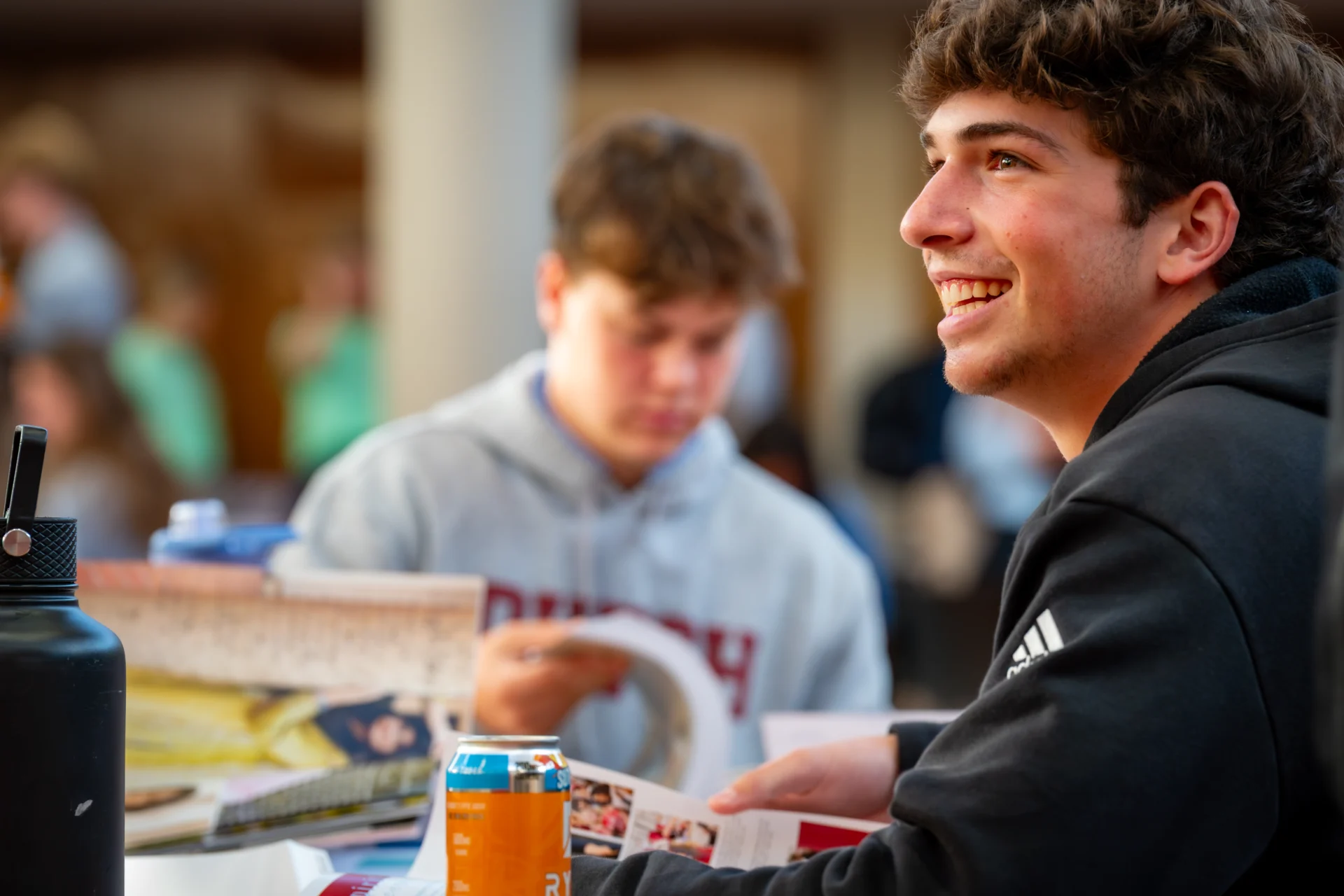
We utilize a six-day modular schedule (A through F cycle), which provides students with a varied and flexible learning environment. Each day consists of 18 approximately 22-minute modules (mods), with classes ranging from two to three mods in length. This structure minimizes the day-to-day sameness of a traditional schedule, promoting responsibility, personal organization, and decision-making skills by eliminating bells and including unscheduled time. This flexible time is used for a variety of academic activities — such as small-group work, focused studio time, supervised study, or working with a Learning Resources Specialist — and non-academic opportunities, including socializing, school activities, or exercise.
Student Support
Holland Hall is committed to supporting all learners through a research-informed, developmentally appropriate approach. Our Student Support services are designed to help students with varying strengths and challenges thrive in a college preparatory environment. We believe in partnering with students, families, and teachers to build academic confidence, independence, and success.
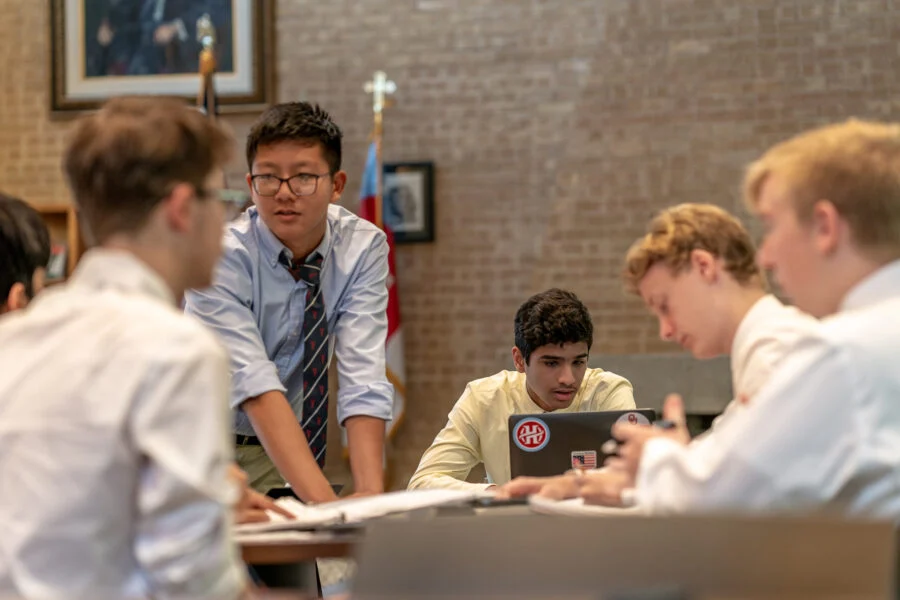
In our Upper School, a learning specialist facilitates the implementation of all Learning Assistance Plans and requests for accommodations with SAT and ACT. Students are required to have a current psychoeducational assessment on file with the school in order to receive learning accommodations.
A learning specialist works closely with all educational teams to deliver appropriate classroom support to all students. Current research in the area of learning science informs our approach as we strive to assist students in navigating a robust college preparatory curriculum.
Student Support Details
Tiered Academic Support
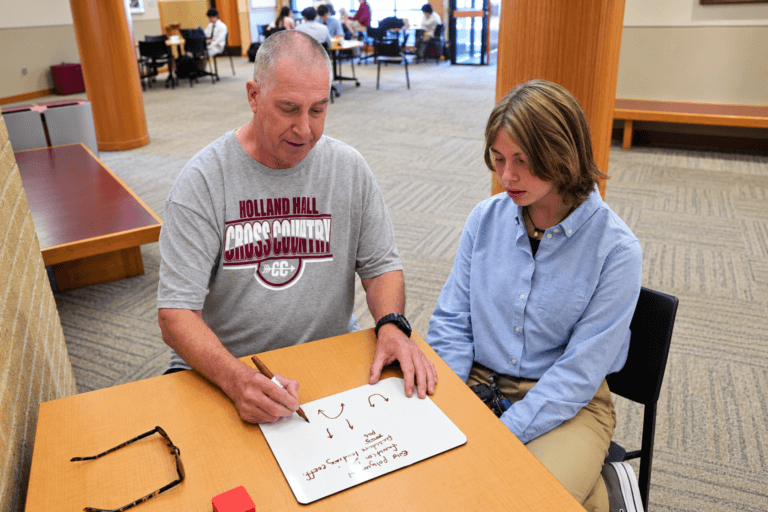
- Meeting with Teachers — Students can schedule meetings with their teachers during their unscheduled time throughout the day, or before or after school.
- Learning Support Services — Our Learning Specialist provides targeted small-group or one-on-one instruction throughout the school day.
- Additional Support Services
- Math lab — Students are free to visit the Math Lab to work through problems with a teacher.
- Writing Center — This student-led resource is run by honors English students.
- Peer Tutoring — A list of tutors is always available.
- Outside Tutoring — If a student requires more intensive, individualized instruction beyond what can be provided at school, the educational team may recommend a professional outside tutor in consultation with the family.
Licensed School Counselors are available to support students’ social-emotional well-being, provide immediate care when needed, and partner with families by connecting them to outside resources.
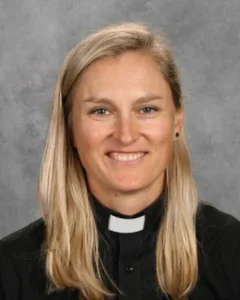
Chaplain — Not only does the Upper School Chaplain teach religious courses and lead chapel services, but she also offers overall pastoral care for students and faculty alike.
Approach To Education
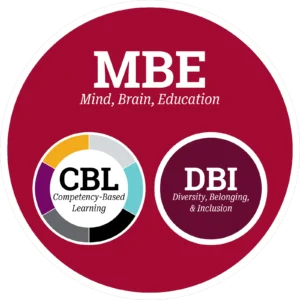
Holland Hall integrates three core frameworks:
Mind, Brain, Education (MBE) Science: We use the latest research on how the brain learns and adapts to inform our teaching methods.
Competency-Based Learning (CBL): We focus on the mastery of essential skills and knowledge, ensuring students develop a strong foundation for future success.
Diversity, Belonging, & Inclusion (DBI): True education begins with a culture of belonging; an active commitment inherent in our Episcopal foundation. By integrating these values into our curriculum and teaching methods, we ensure every student is seen, valued, and empowered to bring their full identity to the learning experience. Across all aspects of school life, we strive to challenge bias and prepare students to lead with integrity, courage, and radical empathy.
Our competency-based approach is at the heart of our mission to foster intellectual curiosity and a lifelong love of learning. Rather than simply memorizing facts, students focus on gaining a deep understanding of essential skills. By focusing on demonstrable competencies, students develop vital transferable skills like critical thinking, problem-solving, and effective communication. This rigorous coursework prepares your child to thrive in college and contribute meaningfully to the world.
These three frameworks work together to create an inclusive and dynamic school experience. By understanding the brain's capacity for change (MBE), we can design a learning environment with clear outcomes (CBL) that supports the diverse strengths of every student (DBI).
Message from Head of Upper School
Holland Hall’s Upper School is founded on a deep commitment to liberal arts experience, student leadership, and positive relationships with peers and faculty.
From the stage to the field to the classroom, students aren’t pigeonholed into one way of navigating their high school years. They explore, question, and find ways to dive deep in areas while not neglecting formative experiences in other parts of the school.
Since leadership takes various forms, their experience both individually and collectively is dependent upon a common commitment to lean in, grow, create meaning, and share in a positive culture.
Because our students and faculty have the space and time to move classwork beyond the classroom, students build positive and constructive relationships with adults who are oriented toward learning and growth. In the end, our students embody our essential qualities of a Holland Hall graduate: they possess a moral compass, intellectual curiosity, a knowledge of self, and a commitment to be an active citizen in their local and broader communities.
David Parks
Upper School Head
Holland Hall News
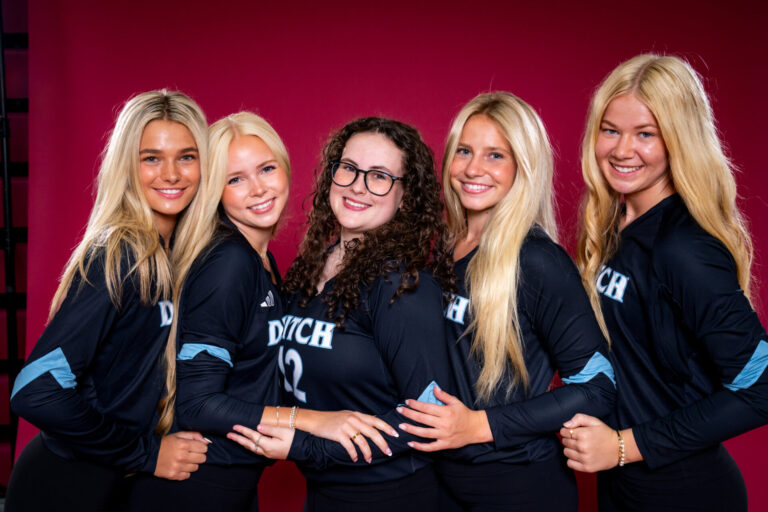
One last run: Holland Hall returns to state with core group of five seniors
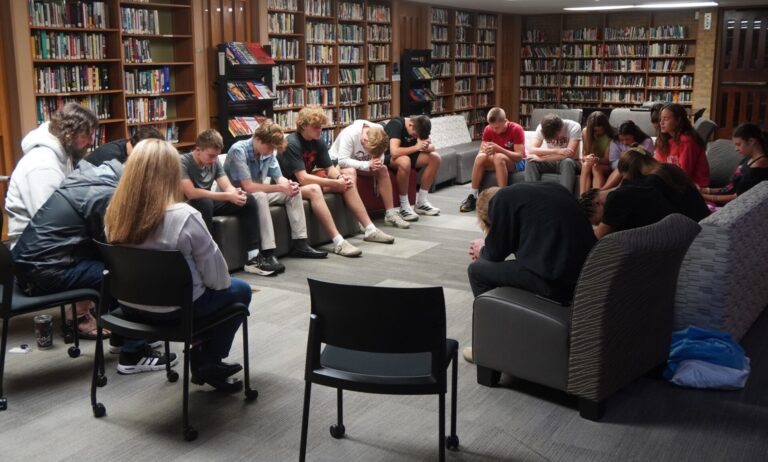
Club spotlight: FCA gives students place to talk faith, more
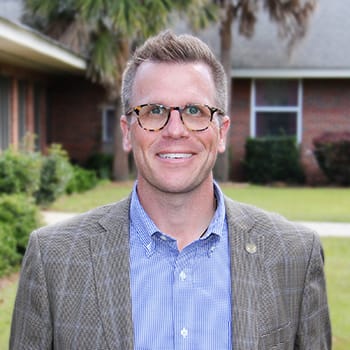
Holland Hall announces new Head of School

Field Day: And the T-shirt design winner is... Order yours today
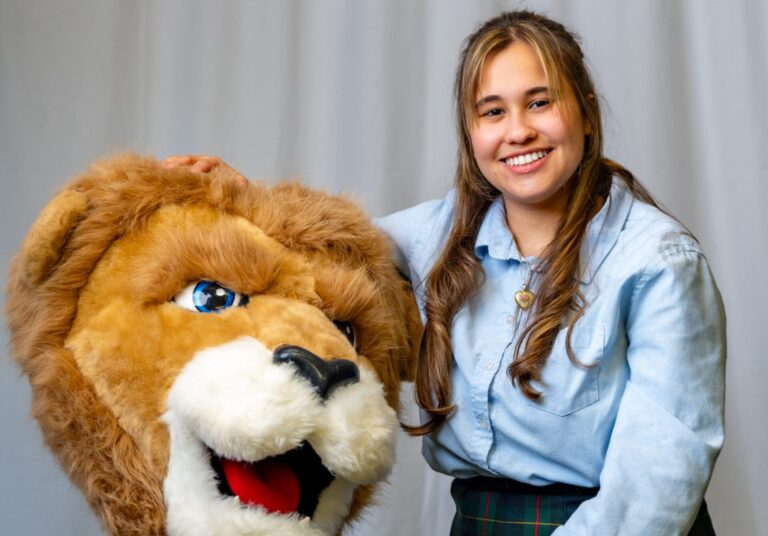
The making of a mascot